

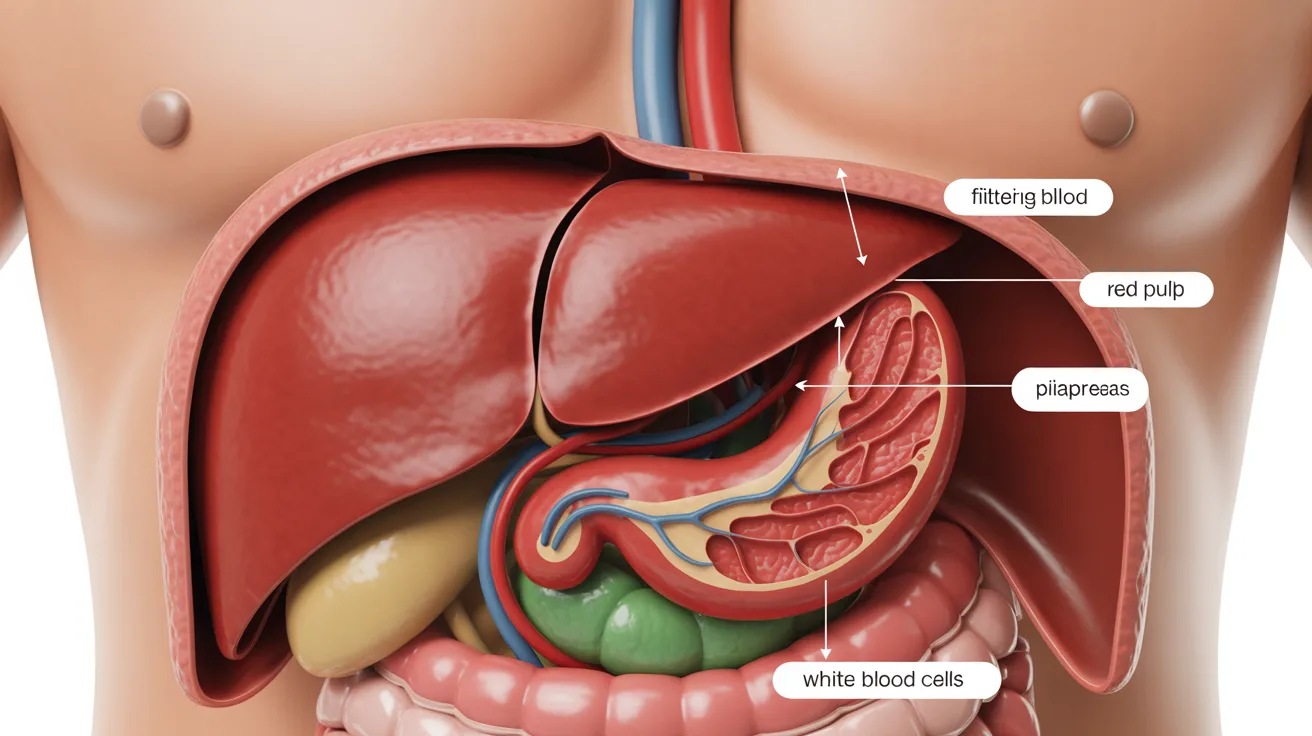
The spleen is one of the most fascinating, yet often overlooked, organs in the human body. Nestled quietly beneath your rib cage on the left side, the spleen is essential for maintaining your health, even though many people rarely think about it—until something goes wrong. In this article, we’ll explore what the spleen does, why it matters, common issues related to it, and practical tips to keep it healthy.
Understanding the Spleen
The spleen is a soft, fist-sized organ that plays multiple roles in the body. It is part of the lymphatic system, which helps fight infections and maintain fluid balance, and it also works closely with the circulatory system.
Key Functions of the Spleen:
- Filtering blood
- Producing white blood cells
- Storing red blood cells and platelets
- Fighting infections
Though not essential for survival—people can live without it—the spleen significantly supports the immune system and helps the body recover from illnesses or injuries.
Anatomy of the Spleen
The spleen sits in the upper left portion of your abdomen, just behind the stomach and under the diaphragm. Its size can vary but is generally about 4 inches long. The spleen is soft and pliable, which allows it to expand and contract depending on the amount of blood it needs to store or filter.
Visual cues to identify the spleen location:
- Left upper quadrant of the abdomen
- Under the rib cage
- Near the stomach and pancreas
Internally, the spleen has two main types of tissue:
- White pulp – contains immune cells that detect and fight infections
- Red pulp – filters blood, removes old or damaged red blood cells, and stores platelets
What Does the Spleen Do?
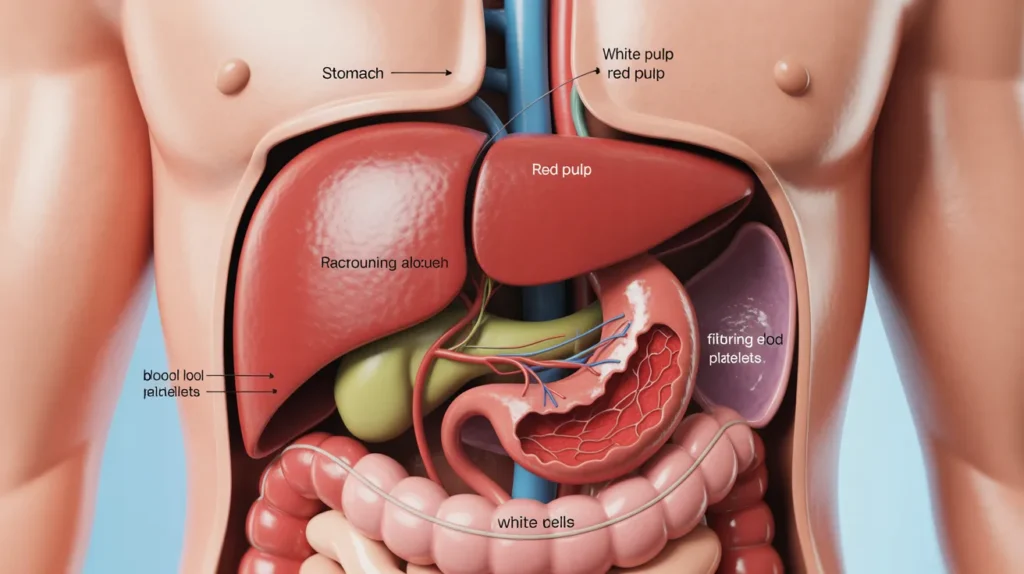
The spleen may seem small, but it’s a multitasking powerhouse. Here’s a closer look at its main functions:
1. Blood Filtration
One of the spleen’s primary roles is filtering your blood. It removes damaged, old, or abnormal red blood cells and recycles useful components, like iron, back into your system. This ensures that your blood remains healthy and efficient in transporting oxygen.
Signs your spleen might not be filtering properly:
- Fatigue
- Pale skin
- Easy bruising
2. Immune System Support
The spleen produces lymphocytes—white blood cells that detect bacteria, viruses, and other pathogens. The white pulp acts as a surveillance system, alerting your body to infections and producing antibodies to fight them.
Example:
If you get a cut, your spleen helps mobilize white blood cells to prevent infection from spreading.
3. Blood Storage
The spleen serves as a reservoir for blood. In emergencies, such as significant blood loss, it can release stored red blood cells and platelets to help maintain circulation and clotting.
Fun fact: This function is more pronounced in animals like dogs or horses, but humans also benefit from this storage capability.
4. Platelet Regulation
Platelets are essential for blood clotting. The spleen stores and releases platelets as needed. If the spleen is overactive (a condition called hypersplenism), it may trap too many platelets, increasing the risk of bleeding.
Common Spleen Issues
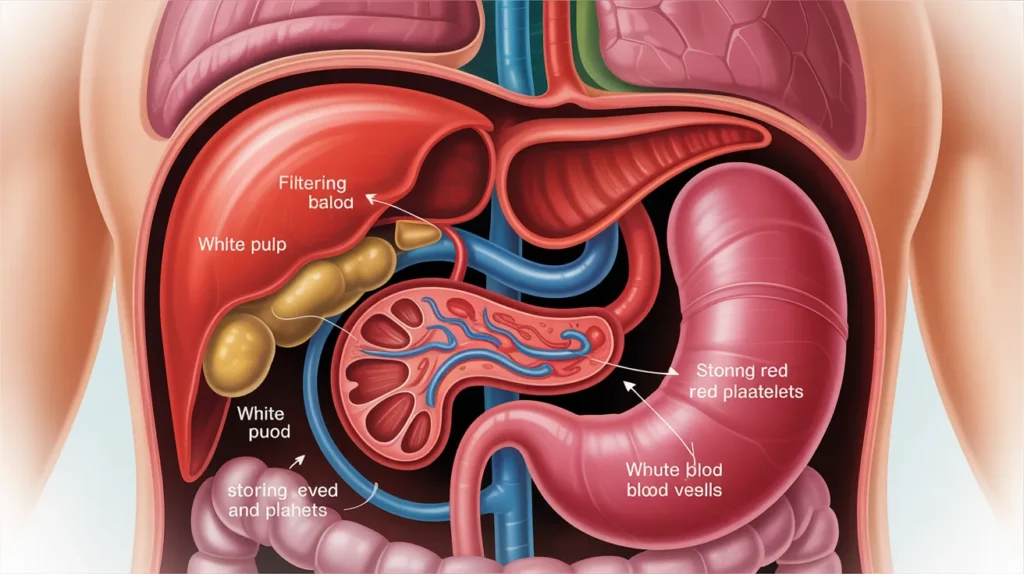
Even though the spleen is resilient, it can be affected by certain conditions:
1. Splenomegaly (Enlarged Spleen)
Enlargement can occur due to:
- Infections (e.g., mononucleosis)
- Liver disease
- Blood disorders
Symptoms:
- Fullness in the left abdomen
- Pain in the upper left quadrant
- Fatigue
2. Ruptured Spleen
A ruptured spleen is often caused by trauma, such as a car accident or sports injury. This is a medical emergency.
Symptoms:
- Severe abdominal pain
- Dizziness or fainting
- Rapid heart rate
3. Hypersplenism
An overactive spleen can destroy blood cells too quickly, leading to anemia, infections, or bleeding problems.
4. Asplenia or Hyposplenia
Some people are born without a spleen or have a spleen that doesn’t function properly. While survival is possible, these individuals are more prone to infections.
Symptoms of Spleen Problems
Because the spleen is tucked under the rib cage, issues are often subtle at first. Symptoms may include:
- Left upper abdominal pain or fullness
- Feeling full without eating much
- Unexplained bruising or bleeding
- Fatigue and weakness
- Frequent infections
If you experience sudden severe pain, it could indicate a ruptured spleen, requiring immediate medical attention.
Tips for a Healthy Spleen
While some conditions are unavoidable, lifestyle choices can help maintain spleen health:
- Eat a balanced diet: Include foods rich in antioxidants (berries, leafy greens) and iron (red meat, beans).
- Stay active: Regular exercise improves circulation and immune function.
- Protect against infections: Wash hands, stay up-to-date on vaccinations, and avoid exposure to harmful pathogens.
- Limit alcohol consumption: Excessive alcohol can strain the liver and indirectly affect spleen health.
- Avoid abdominal trauma: Wear seatbelts and protective gear during sports.
Where the Spleen Can Be Found or Live
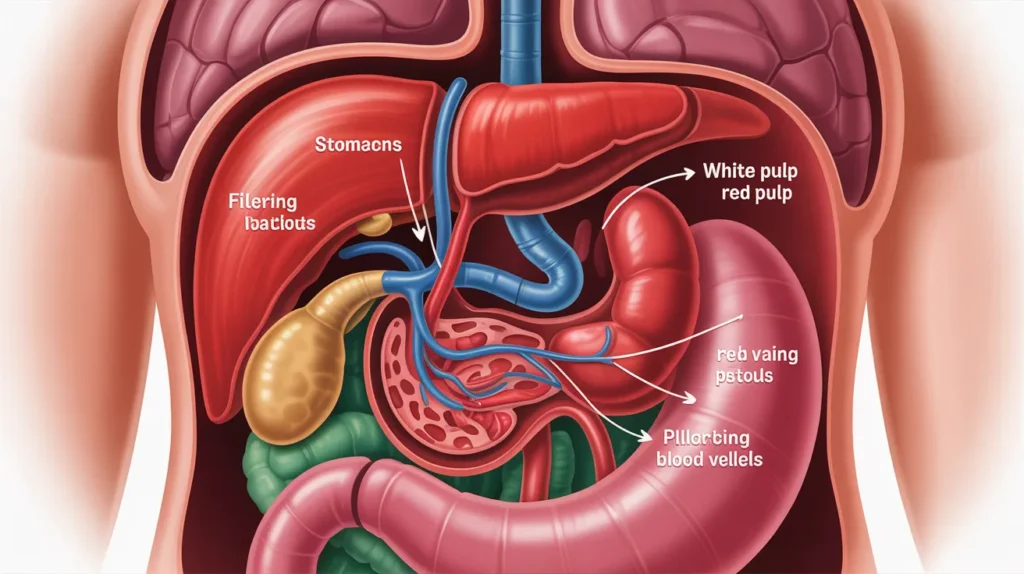
Unlike organs in the animal kingdom, the human spleen is internal, making it less “visible” than organs like the skin or lungs. Here’s where it resides:
- Location in humans: Upper left abdomen, under the rib cage, near the stomach and pancreas.
- Environment: Protected within the body, it thrives on a healthy diet and proper circulation.
- Comparative anatomy: Animals like dogs, cats, and horses also have spleens in similar positions, playing comparable roles in immunity and blood storage.
Diagnosing Spleen Problems
Doctors can identify spleen issues through several approaches:
- Physical Exam: Pressing gently under the left rib cage to detect enlargement.
- Imaging Tests: Ultrasound or CT scan provides detailed visualization.
- Blood Tests: Check for anemia, infection, or abnormal blood cell counts.
Early diagnosis is key to preventing serious complications, especially in trauma cases or chronic conditions.
Treatments for Spleen Conditions
Depending on the issue, treatments may vary:
- Infections: Antibiotics or antiviral medications.
- Enlarged spleen: Treat the underlying cause; sometimes, rest and monitoring are enough.
- Ruptured spleen: Emergency surgery may be required, often involving partial or total removal (splenectomy).
- Overactive spleen: Medications or surgery may help regulate blood cell levels.
Post-splenectomy care:
Without a spleen, your immune system is weaker. Vaccinations, antibiotics, and careful monitoring for infections are crucial.
Interesting Facts About the Spleen
- You can live without a spleen. Other organs like the liver and lymph nodes take over many of its functions.
- The spleen recycles iron from old red blood cells, contributing to healthy blood production.
- Animals often have larger spleens relative to their body size than humans, allowing for rapid blood storage during activity.
FAQ: Common Questions About the Spleen
Q1: Can you feel your spleen?
A: Normally, no. A healthy spleen is tucked under your rib cage and isn’t palpable. Only when it’s enlarged can it sometimes be felt.
Q2: What foods are good for spleen health?
A: Iron-rich foods, antioxidants, and foods that support immune function, like leafy greens, berries, beans, and lean meats, are beneficial.
Q3: Is a ruptured spleen life-threatening?
A: Yes. A ruptured spleen can cause internal bleeding and requires immediate medical attention.
Q4: Can exercise affect the spleen?
A: Moderate exercise supports circulation and immunity. High-impact trauma sports, however, pose a risk for spleen injury.
Conclusion
The spleen may be small, but it’s mighty. From filtering blood and fighting infections to storing vital blood cells, it plays a crucial role in your overall health. Understanding the spleen, recognizing symptoms of problems, and taking steps to maintain it can help ensure your body functions optimally. Even though you could survive without it, keeping your spleen healthy is a valuable part of lifelong wellness.