


Vitamins are essential nutrients that our bodies need to function optimally, and among them, the B vitamins hold a special place. Known for their wide-ranging effects on metabolism, energy production, and neurological health, B vitamins are often referred to as the “energy vitamins.” But what exactly does vitamin B do? In this guide, we’ll explore the roles of B vitamins, their benefits, dietary sources, deficiency symptoms, and practical advice for incorporating them into your daily life.
Understanding Vitamin B: An Overview
Vitamin B isn’t just a single vitamin—it’s a complex of eight different water-soluble vitamins, collectively known as the B-complex vitamins. Each has a unique role in maintaining health and well-being:
- Vitamin B1 (Thiamine): Supports energy production and nervous system function.
- Vitamin B2 (Riboflavin): Aids in energy metabolism and helps maintain healthy skin and eyes.
- Vitamin B3 (Niacin): Important for DNA repair, cholesterol management, and energy metabolism.
- Vitamin B5 (Pantothenic Acid): Essential for synthesizing coenzyme A, supporting metabolism and hormone production.
- Vitamin B6 (Pyridoxine): Regulates neurotransmitters and red blood cell production.
- Vitamin B7 (Biotin): Supports healthy hair, skin, and nails, as well as metabolic processes.
- Vitamin B9 (Folate/Folic Acid): Critical for DNA synthesis, red blood cell formation, and fetal development.
- Vitamin B12 (Cobalamin): Maintains nerve function, red blood cell formation, and supports DNA synthesis.
Each of these B vitamins is water-soluble, meaning the body cannot store them for long periods, so a regular dietary intake is crucial.
The Role of Vitamin B in the Body
B vitamins play a vital role in multiple biological processes. Their main functions include:
1. Energy Production
B vitamins are essential coenzymes in metabolic pathways that convert carbohydrates, proteins, and fats into energy. Without sufficient B vitamins, the body may feel sluggish, fatigued, or weak.
- Example: Thiamine (B1) is necessary for converting glucose into energy for your muscles and brain.
- Practical Tip: If you often feel low on energy despite sleeping well, a B-vitamin-rich diet may help.
2. Brain Health and Nervous System Support
Several B vitamins support neurological functions, including neurotransmitter synthesis and nerve maintenance.
- Vitamin B6 helps produce serotonin and dopamine, which regulate mood and sleep.
- Vitamin B12 protects the myelin sheath of nerves, preventing nerve damage.
- Visual Cue: Signs of deficiency may include numbness or tingling in hands and feet, confusion, or memory problems.
3. Red Blood Cell Formation
Vitamin B12 and folate are critical for producing healthy red blood cells, which carry oxygen throughout the body. Deficiencies can lead to anemia, causing fatigue, weakness, and pale skin.
4. DNA Synthesis and Repair
Folate and B12 work together to synthesize DNA and repair cells. This function is especially important during periods of rapid growth, such as pregnancy or childhood.
5. Cardiovascular Health
Some B vitamins, particularly B6, B12, and folate, help regulate homocysteine levels in the blood. High homocysteine can increase the risk of heart disease. Maintaining sufficient B intake supports a healthy heart and circulatory system.
Signs of Vitamin B Deficiency
Because B vitamins affect so many aspects of health, deficiencies can manifest in diverse ways. Symptoms vary depending on which B vitamin is lacking:
- B1 (Thiamine): Fatigue, irritability, muscle weakness, nerve damage.
- B2 (Riboflavin): Cracked lips, sore throat, swollen tongue, sensitivity to light.
- B3 (Niacin): Pellagra (skin rashes, diarrhea, dementia), fatigue.
- B5 (Pantothenic Acid): Fatigue, nausea, numbness, burning sensations in hands and feet.
- B6 (Pyridoxine): Irritability, depression, confusion, anemia, skin rashes.
- B7 (Biotin): Hair thinning, brittle nails, skin rash around eyes, nose, and mouth.
- B9 (Folate): Fatigue, mouth sores, poor growth, megaloblastic anemia.
- B12 (Cobalamin): Fatigue, tingling hands/feet, memory problems, balance issues, anemia.
Practical Tip: If you experience several of these symptoms, a healthcare provider may recommend a blood test to check your B-vitamin levels.
Where Vitamin B Can Be Found or Live
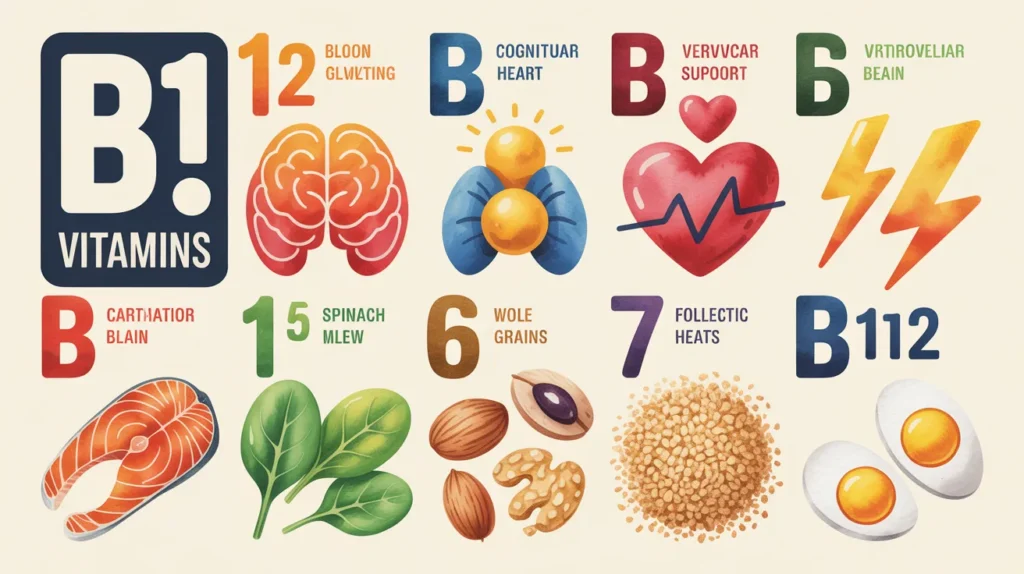
B vitamins are naturally found in various foods, and some may require supplementation if dietary intake is insufficient.
Food Sources for Each B Vitamin
| Vitamin | Common Sources |
|---|---|
| B1 (Thiamine) | Whole grains, pork, sunflower seeds, legumes |
| B2 (Riboflavin) | Milk, eggs, green leafy vegetables, almonds |
| B3 (Niacin) | Chicken, tuna, turkey, mushrooms, peanuts |
| B5 (Pantothenic Acid) | Avocados, yogurt, eggs, mushrooms, sunflower seeds |
| B6 (Pyridoxine) | Bananas, chicken, fish, potatoes, fortified cereals |
| B7 (Biotin) | Egg yolks, almonds, sweet potatoes, spinach |
| B9 (Folate/Folic Acid) | Leafy greens, beans, lentils, citrus fruits, fortified cereals |
| B12 (Cobalamin) | Meat, fish, dairy, eggs, fortified plant-based milks |
Practical Tip: Vegetarians and vegans are often at higher risk for B12 deficiency and may need fortified foods or supplements.
Daily Requirements and Dosage Guidelines
Recommended dietary allowances (RDAs) vary by age, sex, and life stage. Here’s a simplified guideline for adults:
- B1 (Thiamine): 1.1–1.2 mg/day
- B2 (Riboflavin): 1.1–1.3 mg/day
- B3 (Niacin): 14–16 mg/day
- B5 (Pantothenic Acid): 5 mg/day
- B6 (Pyridoxine): 1.3–2 mg/day
- B7 (Biotin): 30 mcg/day
- B9 (Folate/Folic Acid): 400 mcg/day
- B12 (Cobalamin): 2.4 mcg/day
Tip: Pregnant or breastfeeding women may require higher amounts of certain B vitamins, particularly folate and B12.
Practical Advice for Maintaining Healthy B Levels
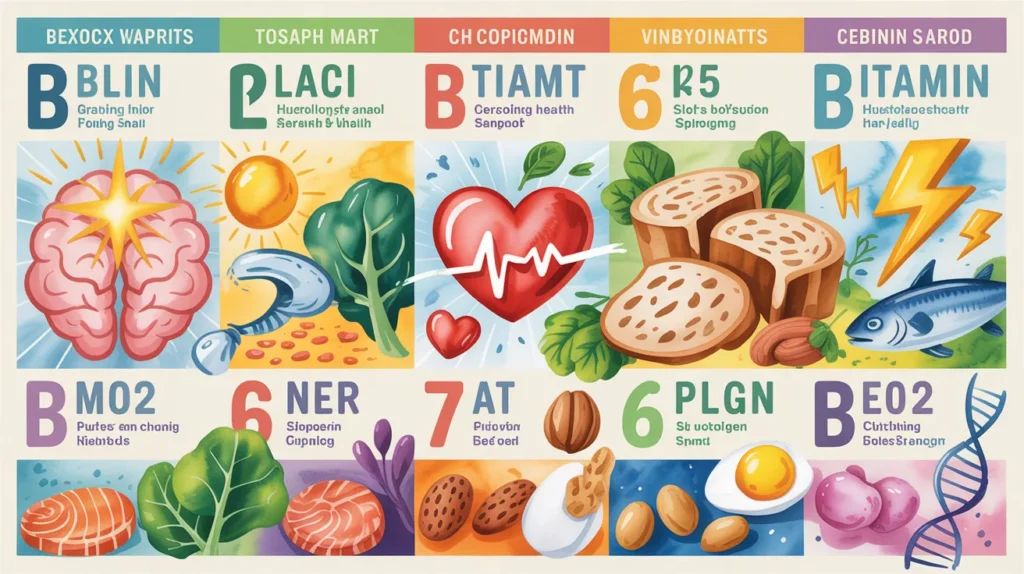
1. Eat a Balanced, Whole-Food Diet
Focus on whole grains, lean meats, legumes, fruits, and vegetables to ensure you get a spectrum of B vitamins naturally.
2. Consider Fortified Foods
For those with restricted diets, foods like fortified cereals, plant-based milks, and nutritional yeast are excellent sources.
3. Supplements When Necessary
B-complex supplements can help people at risk of deficiency, including older adults, vegetarians, vegans, and those with certain health conditions. Always consult a healthcare provider before starting supplements.
4. Lifestyle Factors
- Minimize alcohol intake, as it interferes with B-vitamin absorption.
- Avoid smoking, which can deplete certain B vitamins.
- Regular exercise supports metabolism, enhancing the benefits of B vitamins in energy production.
Visual Cues for Vitamin B Health
- Healthy Hair and Nails: Biotin (B7) deficiency may cause brittle nails or hair thinning.
- Skin Health: Riboflavin (B2) and niacin (B3) help maintain healthy, glowing skin.
- Mood and Cognitive Function: Adequate B6, B12, and folate support memory, concentration, and emotional well-being.
- Energy Levels: A sudden drop in energy may indicate low B vitamin intake, especially thiamine, niacin, or B12.
Special Considerations: Populations at Risk
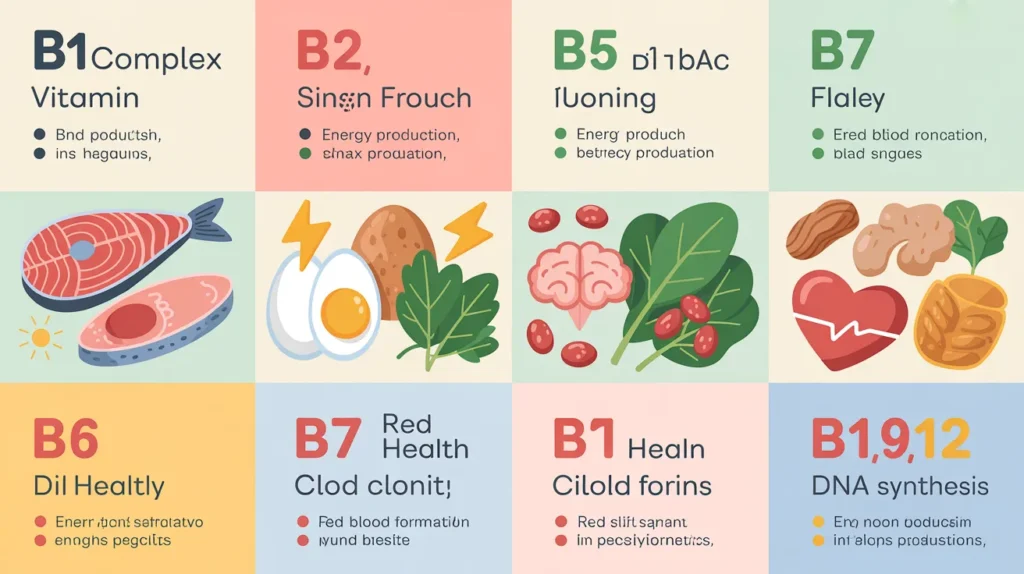
Certain groups are more likely to experience B-vitamin deficiencies:
- Older adults: Reduced absorption of B12 due to lower stomach acid.
- Pregnant women: Increased need for folate to prevent neural tube defects.
- Vegetarians and vegans: Risk of B12 deficiency due to limited animal-derived foods.
- People with gastrointestinal disorders: Conditions like Crohn’s disease or celiac disease can impair absorption.
- Individuals on specific medications: Long-term use of proton pump inhibitors, metformin, or certain antibiotics can interfere with B-vitamin absorption.
Practical Tip: Blood tests and healthcare consultations are key for at-risk populations.
FAQs About Vitamin B
1. Can I get too much vitamin B?
Since most B vitamins are water-soluble, the body excretes excess amounts through urine. However, extremely high doses, especially of B6 and niacin, can cause nerve damage or skin flushing. Always follow recommended dosages.
2. How can I tell if I’m deficient?
Symptoms vary by B vitamin but may include fatigue, irritability, numbness, memory issues, anemia, or hair and skin changes. Blood tests are the most accurate method to confirm deficiencies.
3. Is vitamin B a natural energy booster?
Yes, B vitamins help convert food into energy, support nerve function, and maintain red blood cells. While they don’t give an immediate energy “rush,” maintaining adequate B levels prevents fatigue and supports sustained energy throughout the day.
Conclusion
Vitamin B is essential for almost every aspect of human health, from energy production and brain function to red blood cell formation and cardiovascular health. Maintaining adequate levels through a balanced diet, fortified foods, and, when necessary, supplementation is crucial for overall well-being. By paying attention to symptoms of deficiency and incorporating B-vitamin-rich foods into daily meals, you can support your body’s energy, mental clarity, and physical vitality.