


A Complete, Easy-to-Understand Guide to How Muscles Power the Body
The muscular system is one of the most hardworking and essential systems in the human body. It allows us to move, breathe, digest food, pump blood, and even express emotions. Without it, life as we know it would not be possible.
Just like a well-trained animal relies on strong, healthy muscles to run, jump, and survive, humans depend on their muscular system every moment of the day—often without realizing it. From blinking your eyes to lifting heavy objects, muscles are constantly active behind the scenes.
This guide explores what the muscular system does, how it works, the different types of muscles, common problems, visual cues of muscle health, and practical tips to keep your muscles strong and functional throughout life.
What Is the Muscular System?
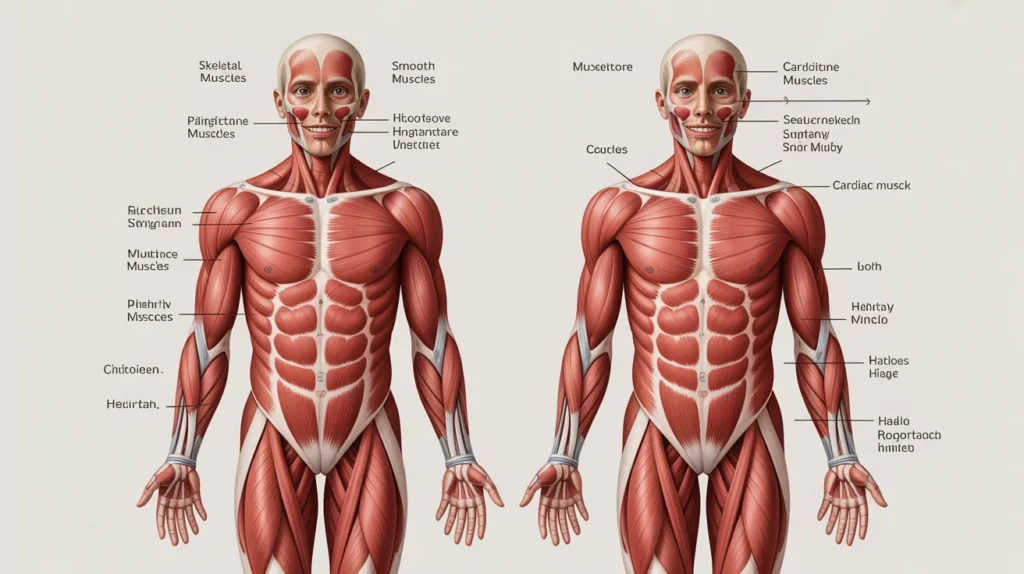
The muscular system is a network of specialized tissues made up of muscle cells (also called muscle fibers) that contract and relax to produce movement and force.
Key Facts About the Muscular System
- The human body has over 600 muscles
- Muscles make up about 40–50% of total body weight
- Muscles work closely with the skeletal and nervous systems
- Most muscles work in pairs (one contracts while the other relaxes)
Think of muscles as the body’s engines—they generate power and convert energy into motion.
What Does the Muscular System Do?
The muscular system has five major functions, each vital for survival and daily activity.
1. Enables Movement of the Body
The most well-known function of the muscular system is movement.
How This Works
- Muscles attach to bones via tendons
- When a muscle contracts, it pulls on the bone
- This creates movement at the joint
Examples of Muscle-Powered Movements
- Walking and running
- Picking up objects
- Chewing food
- Writing or typing
- Turning your head
💡 Visual cue: If you flex your arm and see the biceps bulge, that’s the muscle shortening to create movement.
2. Maintains Posture and Body Position
Even when you are sitting still or standing quietly, your muscles are working.
Why This Matters
- Postural muscles keep the body upright
- They prevent collapsing under gravity
- They stabilize joints and the spine
Common Postural Muscles
- Core (abdominal) muscles
- Back muscles
- Neck and shoulder muscles
- Hip stabilizers
⚠️ Signs of weak posture muscles
- Slouching
- Back or neck pain
- Fatigue after standing
- Rounded shoulders
3. Supports Breathing (Respiration)
Breathing is an automatic process powered by muscles.
Key Respiratory Muscles
- Diaphragm – primary breathing muscle
- Intercostal muscles – located between the ribs
How Muscles Help You Breathe
- The diaphragm contracts and moves downward
- The chest cavity expands
- Air flows into the lungs
- Muscles relax to push air out
🐾 Pet-care analogy: Just like a dog pants using chest and abdominal muscles, humans rely on rhythmic muscle contractions to breathe.
4. Moves Substances Inside the Body
Not all muscles move bones. Some muscles move materials within the body.
Examples
- Food through the digestive tract
- Blood through blood vessels
- Urine from kidneys to bladder
- Food down the esophagus
This movement is often involuntary, meaning you don’t consciously control it.
💡 Visual cue: You don’t feel your food moving, but smooth muscles are constantly pushing it along.
5. Generates Heat and Regulates Body Temperature
Muscles are major contributors to body heat.
How Muscles Produce Heat
- Muscle contractions use energy
- Energy produces heat as a byproduct
- This helps maintain body temperature
Example: Shivering
- Rapid muscle contractions
- Occur when the body is cold
- Help generate warmth quickly
❄️ Cold environment cue: If you’re shivering, your muscular system is actively protecting you.
Types of Muscles in the Body
The muscular system consists of three main types of muscle tissue, each with a unique role.
1. Skeletal Muscles (Voluntary Muscles)
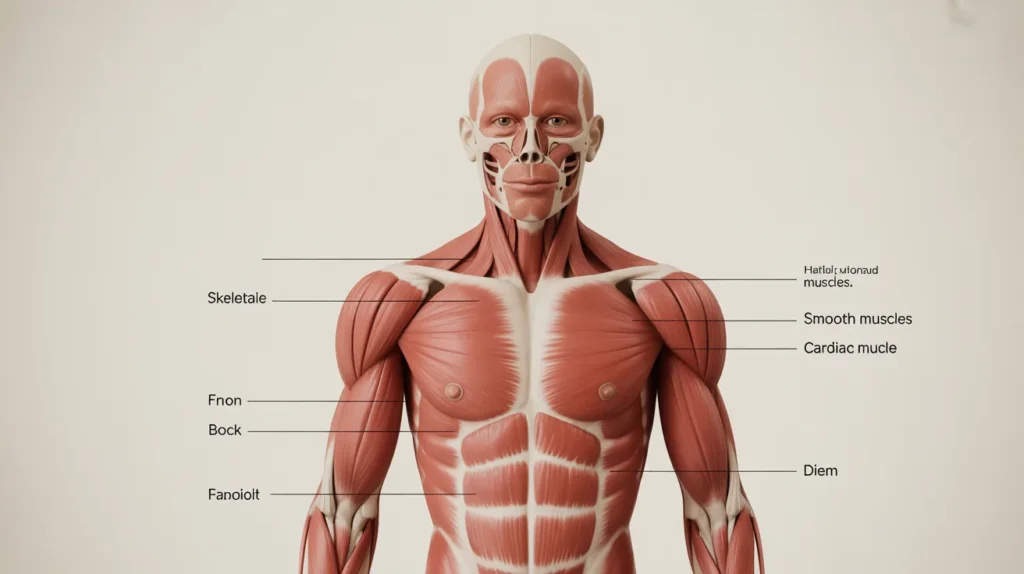
These are the muscles most people think of first.
Characteristics
- Attached to bones
- Controlled consciously
- Striated (striped appearance)
- Fast and powerful contractions
Examples
- Biceps
- Quadriceps
- Hamstrings
- Calf muscles
💪 Function: Movement, posture, strength, and stability
2. Smooth Muscles (Involuntary Muscles)
Smooth muscles are found inside organs.
Characteristics
- Not under conscious control
- Slow, steady contractions
- Non-striated
Locations
- Stomach and intestines
- Blood vessels
- Bladder
- Uterus
🍽️ Example: After eating, smooth muscles push food through the digestive system.
3. Cardiac Muscle (Heart Muscle)
Cardiac muscle is found only in the heart.
Characteristics
- Involuntary
- Extremely strong and fatigue-resistant
- Rhythmic contractions
❤️ Function: Pumps blood continuously throughout life without rest
How the Muscular System Works with Other Systems
Muscles never work alone.
Muscular + Skeletal System
- Muscles pull on bones
- Bones act as levers
- Joints allow movement
Muscular + Nervous System
- Brain sends electrical signals
- Muscles respond by contracting
- Timing and coordination are controlled
Muscular + Circulatory System
- Blood delivers oxygen and nutrients
- Removes waste products
- Supports muscle recovery
Where the Muscular System Can Be Found or Live
Although the muscular system is not a creature, it “lives” throughout the entire body, adapting to different environments within it.
Locations and Environments
- Attached to bones (skeletal muscles)
- Embedded in organ walls (smooth muscles)
- Inside the heart (cardiac muscle)
- Surrounding joints for stabilization
- Beneath the skin shaping body contours
Host Environment
- Lives within the human body
- Functions in oxygen-rich and oxygen-poor conditions
- Adapts to physical demands like exercise or rest
🐾 Care analogy: Just like animals develop stronger muscles based on their habitat and activity, human muscles adapt to lifestyle and environment.
Common Muscular System Problems and Symptoms
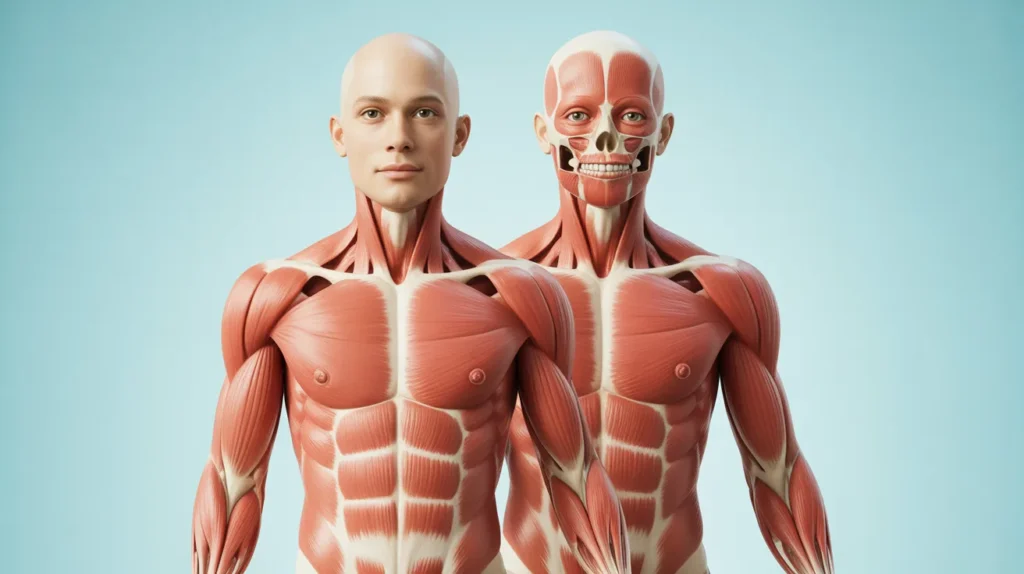
Muscles can become injured, weak, or diseased.
Common Muscle Conditions
- Muscle strains
- Muscle cramps
- Tendinitis
- Muscle atrophy
- Muscular dystrophy
Symptoms to Watch For
- Pain or tenderness
- Weakness
- Swelling
- Stiffness
- Limited movement
⚠️ Visual cues
- Uneven muscle size
- Twitching or spasms
- Difficulty performing normal tasks
How to Keep the Muscular System Healthy
Muscle health requires consistent care—just like caring for a pet’s muscles through proper activity and nutrition.
1. Regular Physical Activity
Recommended Activities
- Strength training
- Walking or jogging
- Swimming
- Stretching and yoga
💡 Tip: Use muscles regularly to prevent weakness and stiffness.
2. Proper Nutrition
Muscles need fuel to grow and repair.
Key Nutrients
- Protein
- Healthy fats
- Carbohydrates
- Vitamins D and B12
- Minerals like magnesium and potassium
🥩 Visual cue: Poor nutrition often leads to muscle fatigue and slow recovery.
3. Adequate Rest and Recovery
- Muscles grow during rest
- Sleep supports repair
- Overuse leads to injury
🛌 Tip: Aim for 7–9 hours of sleep daily.
4. Hydration
- Prevents cramps
- Supports muscle contractions
- Improves endurance
💧 Dehydration is a common cause of muscle pain.
Signs of a Healthy Muscular System
- Balanced muscle tone
- Good posture
- Smooth, controlled movements
- Minimal fatigue during daily tasks
- Quick recovery after activity
Common Questions About the Muscular System
Does the muscular system work all the time?
Yes. Even during sleep, muscles control breathing, posture, and blood flow.
Can muscles repair themselves?
Yes, with proper nutrition and rest, muscles regenerate and grow stronger.
Do muscles weaken with age?
Yes, but regular exercise can slow or prevent muscle loss.
Frequently Asked Questions (FAQ)
1. What is the main job of the muscular system?
The muscular system enables movement, maintains posture, supports vital functions, and produces body heat.
2. How many muscles are in the human body?
There are over 600 muscles in the human body.
3. Can muscle damage be permanent?
Some damage heals completely, while severe or genetic conditions may cause long-term weakness.