


The American flag is one of the most recognized symbols in the world. Traditionally red, white, and blue, it represents freedom, unity, sacrifice, and national identity. However, over the years, variations of the flag have emerged—each carrying its own message. One of the most striking and often misunderstood versions is the black American flag.
If you’ve seen a black American flag flying on a house, vehicle, clothing, or online and wondered what it means, you’re not alone. This symbol can provoke strong reactions, curiosity, confusion, or even concern. Like many symbols, its meaning depends heavily on context, intent, and setting.
In this guide, we’ll gently and thoroughly explore what the black American flag means, where it comes from, how it’s used today, and how to interpret it responsibly—just as you would carefully assess a pet’s behavior before jumping to conclusions.
Understanding Symbols: Why Context Matters
Before diving into specifics, it’s important to understand one key principle:
Symbols behave a lot like living creatures—they adapt, evolve, and mean different things in different environments.
Just as a dog’s behavior can signal fear, playfulness, or illness depending on the situation, a black American flag can represent very different ideas depending on:
- Who is displaying it
- Where it is displayed
- When it is displayed
- How it is designed
There is no single, universal meaning—and misunderstanding it can lead to unnecessary fear or conflict.
What Is the Black American Flag?
The black American flag is a monochrome version of the U.S. flag, typically featuring:
- Black background
- Black stars
- Black stripes
Sometimes it includes:
- White outlines
- Distressed or weathered designs
- Thin-line color accents (such as gray, blue, or red)
Unlike the official U.S. flag, this version is not government-issued and is considered a symbolic or expressive variation.
Historical Origins of the Black American Flag
Early Military Associations
The use of black flags predates the United States. Historically, black flags were used in warfare to signal:
- No surrender
- Extreme resolve
- Mourning or death
Some historians trace black flags back to pirate flags (like the Jolly Roger), which symbolized intimidation and finality.
Civil War-Era Symbolism
During the American Civil War, black flags were sometimes associated with:
- Mourning fallen soldiers
- Signals of defiance
- Psychological warfare
While not widespread, the color black carried strong emotional weight—especially related to death, loss, and resistance.
Modern Meanings of the Black American Flag
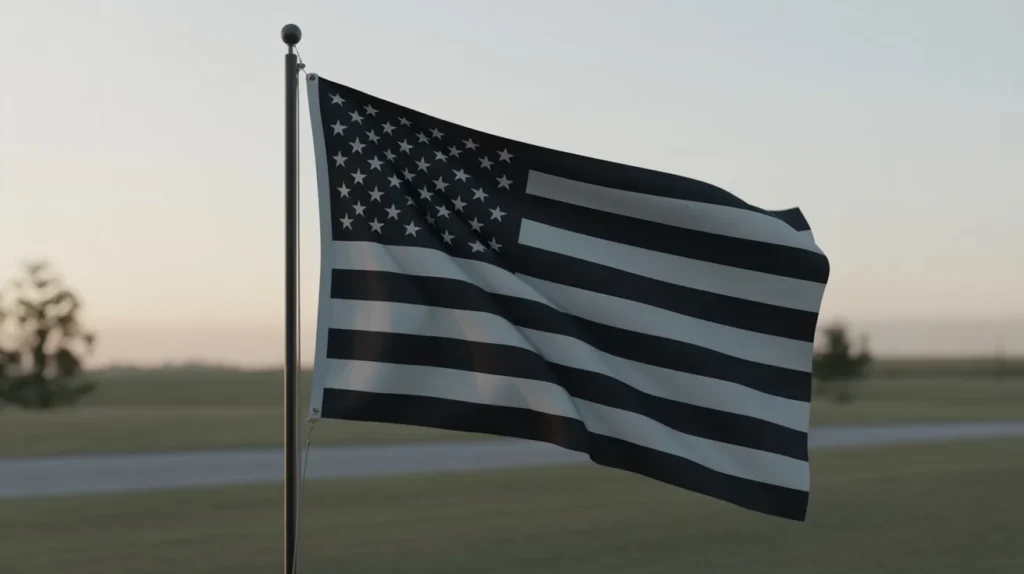
Today, the black American flag has multiple interpretations, which can coexist. Think of these meanings as “symptoms” rather than diagnoses—clues that need context.
1. Symbol of Defiance or Resistance
One of the most common modern interpretations is defiance.
For some individuals, the black American flag represents:
- Resistance to perceived tyranny
- Opposition to government overreach
- A belief in standing one’s ground
This meaning often aligns with the phrase:
“No quarter given.”
Visual cues that support this meaning:
- Paired with slogans about freedom or resistance
- Displayed alongside firearms imagery
- Found at protests or political rallies
2. Expression of Mourning or Protest
Another interpretation sees the black American flag as a sign of grief or dissatisfaction with the current state of the nation.
In this sense, the flag may symbolize:
- Mourning the loss of civil liberties
- Protest against injustice
- Disappointment in leadership or policies
This usage is similar to flying a flag at half-staff—but more emotionally charged.
Common situations:
- Following national tragedies
- After controversial political events
- During periods of social unrest
3. Military and Law Enforcement Symbolism
Among some military personnel and law enforcement supporters, the black American flag can represent:
- Honor
- Sacrifice
- Brotherhood
In these cases, it may be used to show solidarity with fallen service members.
Important note:
This meaning is not universal and can be confused with other interpretations, especially when paired with aggressive imagery.
4. Extremist or Radical Interpretations (Context-Dependent)
In some contexts, the black American flag has been adopted by:
- Extremist groups
- Anti-government militias
- Radical political movements
This is not always the case, but it’s a reason the flag can raise concern.
Symptoms that suggest this interpretation:
- Displayed with hate symbols
- Accompanied by violent rhetoric
- Used to intimidate others
Just as a cough doesn’t always mean serious illness, a black flag alone doesn’t automatically signal extremism—but context matters.
Is the Black American Flag Anti-American?
This is one of the most common questions.
Short answer: Not necessarily.
Some people who display the black American flag:
- Consider themselves deeply patriotic
- Believe they are honoring the “true” values of the nation
- See it as a warning, not a rejection
Others may use it to express frustration or anger toward the country’s direction.
Key takeaway:
Patriotism and protest can coexist, even when expressed through uncomfortable symbols.
How the Black American Flag Differs from Other Flag Variations
Black vs. Thin Blue Line Flag
The Thin Blue Line flag includes a blue stripe and typically represents support for law enforcement.
The black American flag:
- May or may not include thin lines
- Has broader, less specific symbolism
- Can be more ambiguous
Black vs. Upside-Down American Flag
An upside-down American flag traditionally signals distress or emergency.
A black American flag:
- Signals resistance, mourning, or defiance
- Is more confrontational in perception
Common Misunderstandings About the Black American Flag
“It Always Means Violence”
❌ False
While some use it aggressively, many do not.
“It’s Illegal to Fly”
❌ False
In the U.S., expressive flag displays are protected under free speech.
“Only Extremists Use It”
❌ False
The symbol is used by a wide range of individuals with different beliefs.
How to Interpret a Black American Flag Responsibly
Just like observing an animal before assuming illness, use careful observation.
Ask Yourself:
- Where is it displayed? (Home, rally, vehicle, online)
- Is it paired with words or symbols?
- Is the setting calm or confrontational?
- Is the owner known for a specific cause?
Practical Advice
- Avoid immediate assumptions
- Look for accompanying cues
- Recognize emotional expression
Emotional and Psychological Impact
Symbols can affect people deeply.
Common Reactions:
- Fear
- Anger
- Curiosity
- Validation
These reactions are valid. The black American flag is designed—intentionally or not—to provoke attention.
Where What Does the Black American Flag Mean Can Be Found or Live
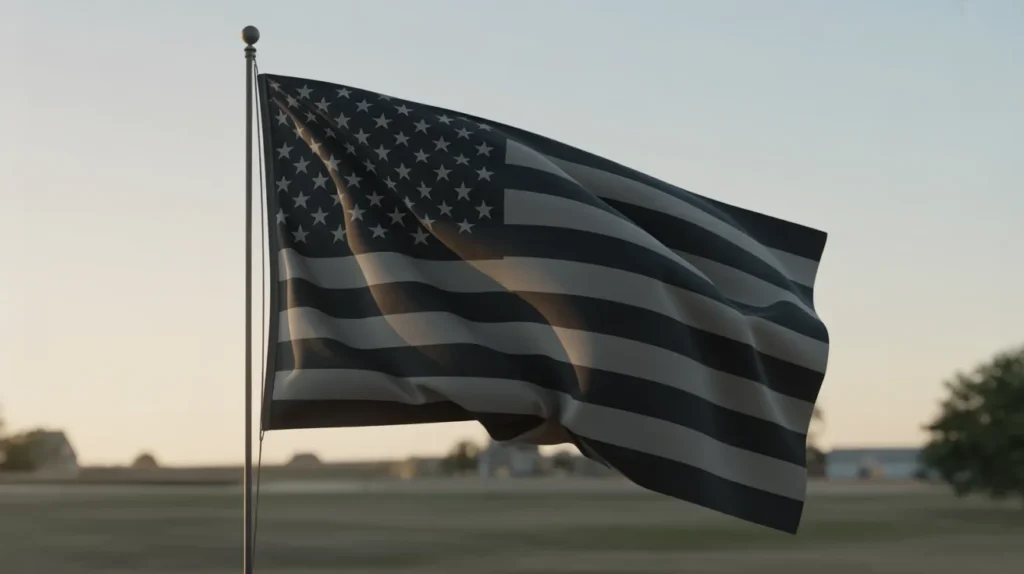
While not a living creature, the black American flag “inhabits” specific environments, much like certain animals thrive in particular habitats.
Common Places You May Encounter It:
- Residential homes or garages
- Pickup trucks or motorcycles
- Military or tactical apparel
- Protest sites
- Online forums and social media
- Stickers, patches, and merchandise
Typical “Habitats”:
- Politically active communities
- Areas with strong military presence
- Times of national tension or debate
Understanding its environment helps clarify its intent.
Should You Be Concerned If You See One?
Concern depends on context, not color alone.
Low Concern Indicators:
- Displayed quietly without messaging
- Paired with respectful patriotic symbols
- No aggressive language present
Higher Concern Indicators:
- Accompanied by threats or hate symbols
- Used to intimidate
- Displayed in volatile situations
Trust observation over assumption.
Tips for Discussing the Black American Flag with Others
If the topic comes up in conversation:
- Stay curious, not confrontational
- Ask open-ended questions
- Listen more than you speak
- Avoid labeling or accusations
Much like discussing a pet’s health with a vet, calm communication matters.
Frequently Asked Questions (FAQ)
1. What does the black American flag symbolize most commonly?
It often symbolizes defiance, resistance, or mourning, but meanings vary widely based on context.
2. Is the black American flag disrespectful to veterans?
Some veterans find it disrespectful, while others see it as a symbol of sacrifice or warning. Reactions vary.
3. Is it legal to fly a black American flag?
Yes. In the United States, it is protected under free speech laws.
4. Does the black American flag mean “no surrender”?
In some interpretations, yes—but not universally.
Final Thoughts
The black American flag is a complex, emotionally charged symbol, much like a warning coloration in nature. It doesn’t exist to comfort—it exists to signal something important to the person displaying it.
Understanding it requires:
- Patience
- Context
- Emotional intelligence