

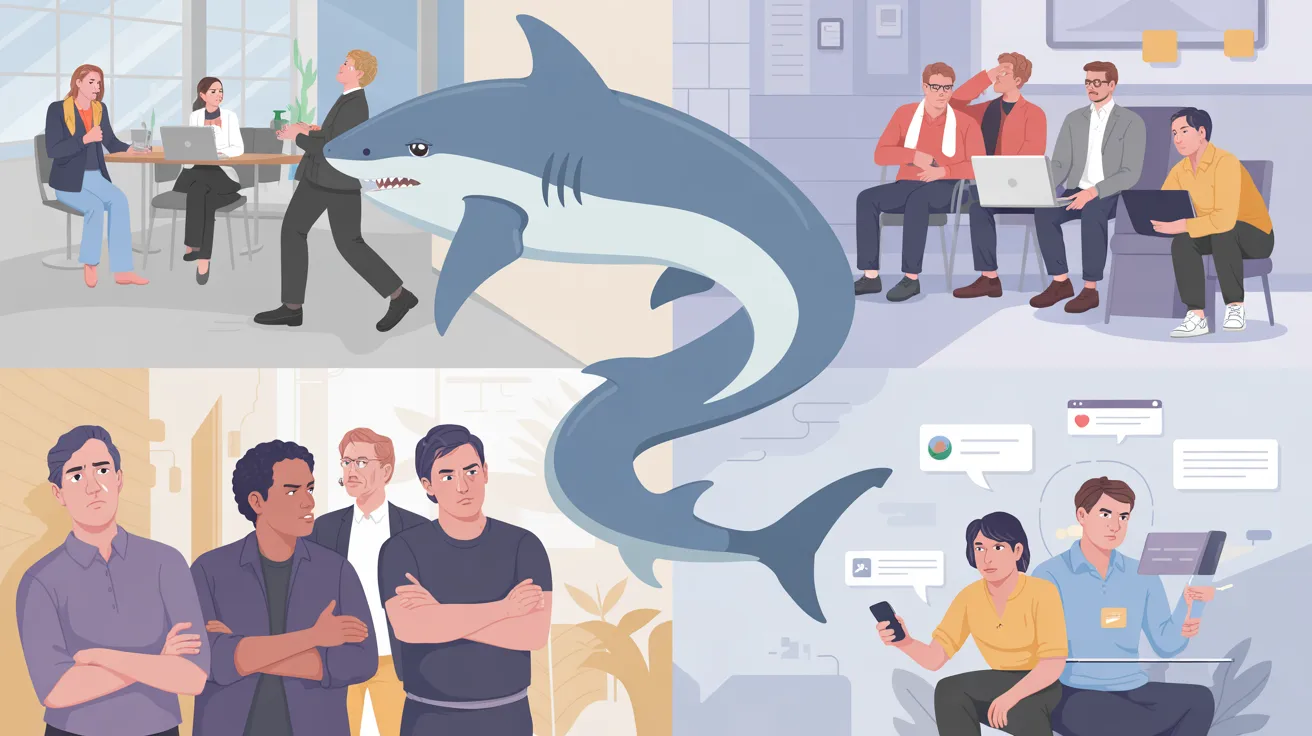
The word “sharking” might sound intimidating, mysterious, or even a little funny depending on where you heard it. Like many modern terms, sharking doesn’t have just one meaning. Its definition changes depending on context, environment, and behavior, much like how the word “bite” can mean something very different in food, animals, or conversation.
In this guide, we’ll carefully break down what sharking means, how it’s used in different situations, what behaviors to look for, and how to respond if you encounter it. Think of this article as a field guide—similar to how a veterinarian explains animal behavior so owners can recognize, prevent, and manage problems early.
Understanding the Core Meaning of “Sharking”
At its core, sharking refers to aggressive, predatory, or exploitative behavior, usually carried out in a persistent, opportunistic way.
The term comes from the word “shark”, an animal commonly associated (fairly or unfairly) with:
- Circling behavior
- Opportunistic feeding
- Persistence
- Targeting weakness
When someone is described as sharking, it usually implies they are:
- Watching closely
- Waiting for advantage
- Applying pressure
- Taking advantage of vulnerability
However, the exact meaning depends on the setting.
Common Contexts Where “Sharking” Is Used
1. Sharking in Social and Personal Situations
In everyday conversation, sharking often describes a person who:
- Circles socially
- Pushes boundaries
- Applies subtle pressure
- Exploits emotional or situational weakness
Example
“He kept hovering around her after she said no—total sharking behavior.”
In this sense, sharking is not physical violence, but rather unwanted persistence.
2. Sharking in Dating and Relationships
In dating contexts, sharking describes behavior that feels predatory rather than mutual.
Common signs include:
- Ignoring clear rejection
- Using guilt or pressure
- Repeatedly pushing for intimacy
- Targeting emotionally vulnerable people
This type of sharking often starts subtle and escalates over time.
3. Sharking in Sales and Business
In business or sales environments, sharking refers to high-pressure, aggressive selling tactics.
Typical behaviors:
- Targeting confused or inexperienced customers
- Rushing decisions
- Hiding critical details
- Using fear or urgency to force a sale
Example
“That dealership was sharking—no space to think, just pressure.”
4. Sharking in Gaming and Gambling
In gaming or gambling communities, sharking means targeting weaker or less experienced players.
Examples:
- Skilled players circling beginner tables
- Waiting for tired or emotional players
- Exploiting predictable mistakes
This behavior is often technically allowed, but socially frowned upon.
5. Sharking in Online Spaces
Online sharking has become increasingly common.
Includes:
- Predatory DMs
- Exploiting trending trauma or controversy
- Targeting minors or emotionally vulnerable users
- Aggressive engagement farming
Is Sharking Always Negative?
In most contexts, yes—sharking carries a negative connotation.
However, there are rare neutral or joking uses:
- Competitive sports trash talk
- Poker slang
- Dark humor among friends
Still, when used seriously, sharking implies harm, pressure, or exploitation.
Behavioral “Symptoms” of Sharking
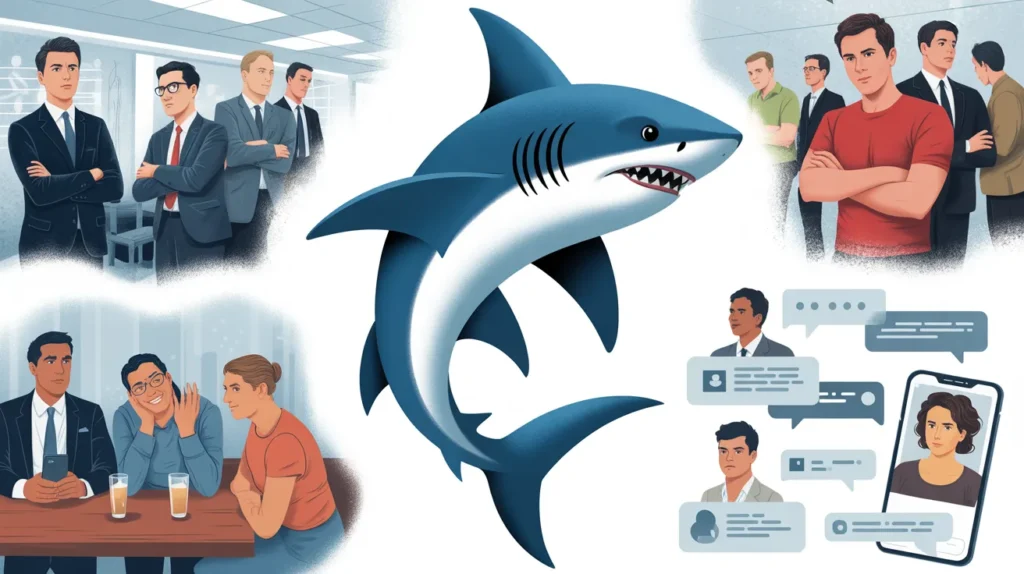
Just like spotting unhealthy animal behavior early, recognizing sharking early can prevent harm.
Key Warning Signs
- 🚩 Repeated boundary violations
- 🚩 Ignoring verbal or nonverbal “no”
- 🚩 Circling behavior (hovering, lurking)
- 🚩 Pressure disguised as concern
- 🚩 Targeting emotional weakness
Visual Cues That Suggest Sharking
Even without words, sharking behavior can be spotted visually.
In Person
- Standing too close repeatedly
- Blocking exits or movement
- Constant eye contact without engagement
- Hovering on the edges of conversations
Online
- Immediate replies to vulnerable posts
- Excessive emojis or flattery
- Sudden shifts from friendly to sexual
- Repeated messaging after silence
Why Do People Engage in Sharking?
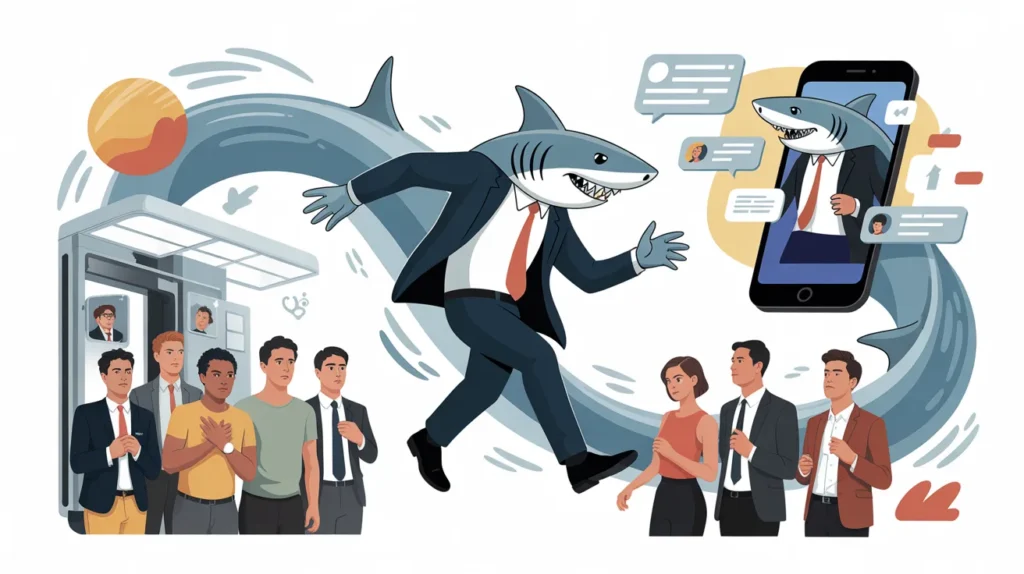
Understanding why sharking happens can help with prevention and response.
Common Motivations
- Desire for control
- Fear of rejection
- Entitlement
- Competitive mindset
- Financial gain
- Lack of empathy
Much like animals that haven’t learned social boundaries, sharking behavior often develops when limits are never enforced.
Practical Advice: How to Respond to Sharking
If You Are the Target
- Be clear and firm
- Avoid over-explaining
- Document behavior if needed
- Remove access (block, leave, disengage)
- Trust discomfort—it’s a signal
If You Witness Sharking
- Interrupt politely but firmly
- Check in with the targeted person
- Name the behavior if appropriate
- Offer an exit or distraction
How to Prevent Sharking Situations
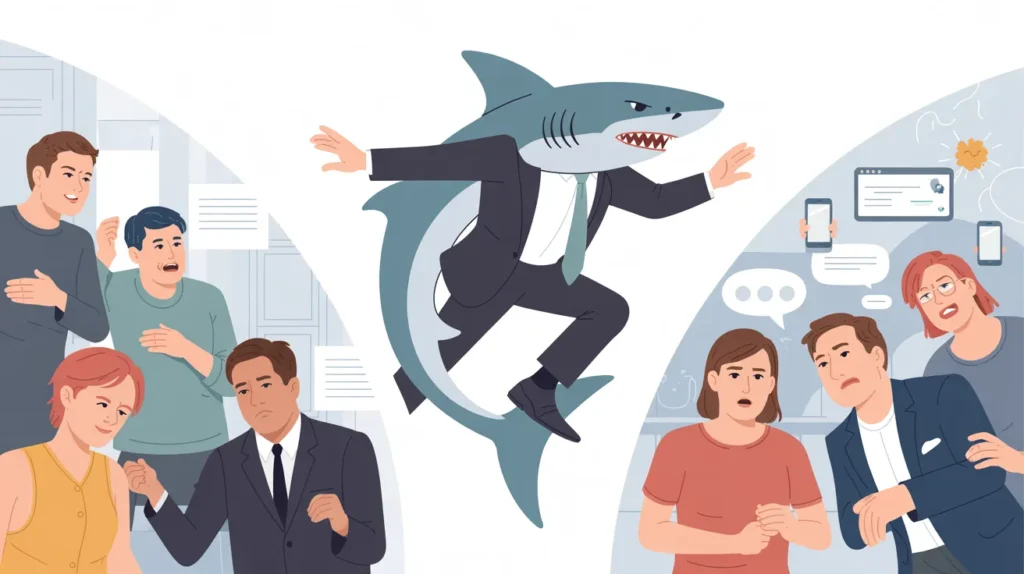
Just as pet owners prevent problems through training and environment, humans can reduce sharking risk.
Prevention Tips
- Set boundaries early
- Avoid oversharing with strangers
- Trust initial discomfort
- Don’t reward persistence
- Use group settings when unsure
Sharking vs. Similar Terms
| Term | How It Differs |
|---|---|
| Harassment | Often explicit or repeated |
| Flirting | Mutual and welcomed |
| Persistence | Stops when boundaries appear |
| Stalking | Obsessive and threatening |
| Sharking | Opportunistic, pressuring, predatory |
Cultural and Regional Use of “Sharking”
The meaning of sharking can shift by culture.
- North America: Dating, sales, social pressure
- UK & Australia: Gambling and business
- Online slang: Predatory DMs, clout exploitation
Where Sharking Can Be Found or “Live”
While sharking isn’t a creature, it thrives in certain environments—much like animals prefer specific habitats.
Common “Habitats” of Sharking Behavior
- 🏙️ Crowded social spaces (bars, clubs)
- 🎮 Competitive gaming platforms
- 💼 High-pressure sales floors
- 🌐 Social media comment sections
- 🎰 Casinos and online gambling sites
- 📱 Dating apps with poor moderation
These environments allow low accountability and high opportunity, making them ideal for sharking behavior to emerge.
Can Sharking Be Unintentional?
Yes. Some people shark without realizing it.
Unintentional Sharking May Include:
- Misreading social cues
- Cultural differences
- Poor communication skills
- Anxiety-driven persistence
That said, impact matters more than intent.
Can Someone Change Sharking Behavior?
Absolutely—if they’re willing.
Helpful Steps:
- Learning consent and boundaries
- Practicing empathy
- Accepting rejection gracefully
- Seeking feedback
- Slowing down interactions
Like behavioral training, awareness is the first step.
Common Myths About Sharking
Myth 1: “It’s just confidence”
Confidence respects boundaries. Sharking ignores them.
Myth 2: “They didn’t say no clearly”
Silence, discomfort, or withdrawal often are a no.
Myth 3: “Only men shark”
Anyone can display sharking behavior.
Why the Term “Sharking” Matters
Language helps us identify patterns.
By naming behavior:
- We make it visible
- We reduce normalization
- We empower response
Just as veterinarians name behaviors to protect animals, naming sharking helps protect people.
Frequently Asked Questions (FAQ)
1. Is sharking illegal?
Not necessarily. Sharking becomes illegal only when it crosses into harassment, fraud, or stalking.
2. Is sharking the same as flirting?
No. Flirting is mutual and stops when unwelcome. Sharking continues despite discomfort.
3. Can businesses be accused of sharking?
Yes. Aggressive or deceptive sales tactics are often described as sharking.
4. How do I call out sharking without escalating?
Use calm, direct language: “Please stop. This isn’t comfortable.”
Final Thoughts
Sharking is a powerful word because it captures a familiar feeling—being pressured, watched, or targeted when you’re vulnerable.
Understanding what it means:
- Helps you protect yourself
- Helps you support others
- Encourages healthier social behavior
Like recognizing warning signs in animal behavior, recognizing sharking early can prevent long-term harm.