


A Friendly, In-Depth Guide to Understanding RPM in Everyday Life
If you’ve ever looked at a car dashboard, used a washing machine, read about computer hardware, or even shopped for a blender, you’ve probably seen the term RPM. It’s one of those abbreviations that appears everywhere—yet many people aren’t fully sure what it means or why it matters.
In this guide, we’ll gently walk you through what RPM stands for, how it works, where you’ll find it, and how to understand it in real-world situations. Think of this article as a calm, reassuring check-up—like a veterinarian explaining your pet’s heart rate, but for machines instead.
By the end, you’ll not only know what RPM means, but you’ll also know how to read it, compare it, and use it wisely.
What Does RPM Stand For?
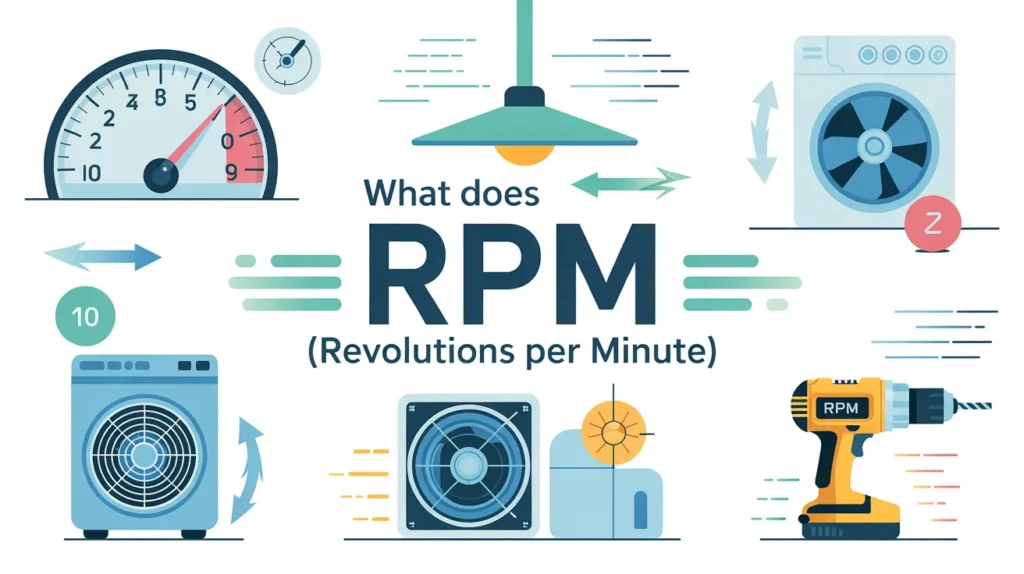
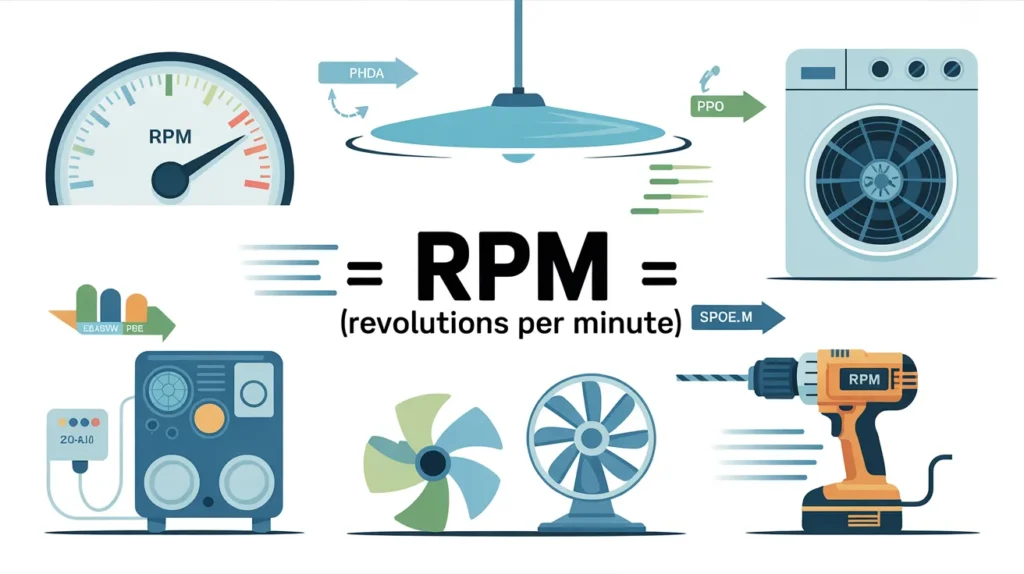
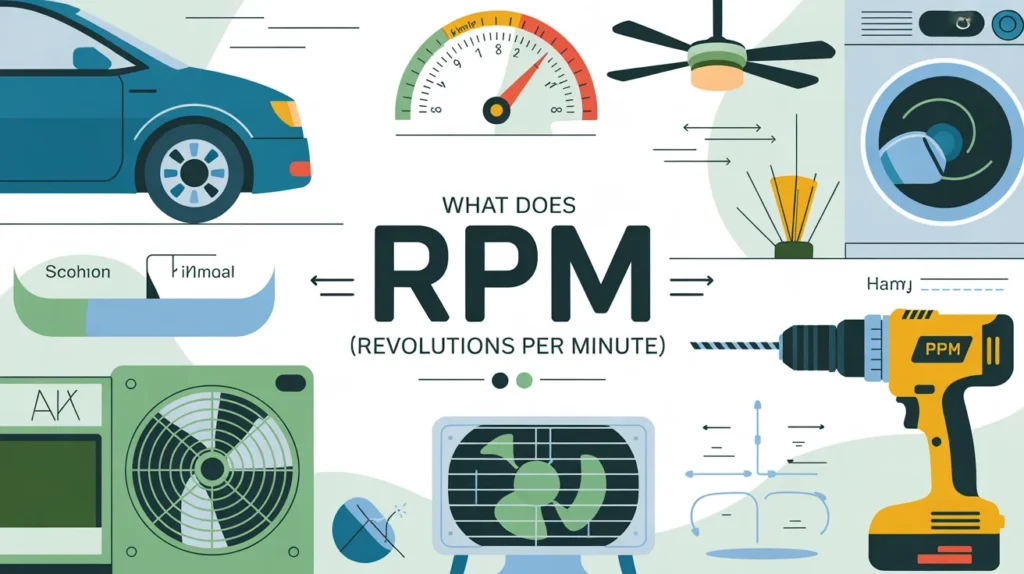
RPM stands for “Revolutions Per Minute.”
It is a unit of measurement used to describe how many complete rotations or turns something makes in one minute.
In simple terms:
- One revolution = one full turn or rotation
- Per minute = measured over 60 seconds
So, if something is spinning at 1,000 RPM, it completes 1,000 full rotations every minute.
Why RPM Matters (And Why You Should Care)
RPM is like a vital sign for machines—similar to:
- A heartbeat for animals 🐾
- A breathing rate for humans
- A pulse that tells us how hard something is working
Understanding RPM helps you:
- Judge speed
- Predict performance
- Prevent damage or wear
- Choose the right equipment
Too low, and a machine may be sluggish.
Too high, and it may overheat, vibrate, or fail.
A Quick Visual Cue: How RPM Looks in Real Life
Imagine:
- A ceiling fan slowly spinning → low RPM
- A drill bit spinning fast → high RPM
- A car engine revving loudly → increasing RPM
📌 Higher RPM = faster rotation
📌 Lower RPM = slower rotation
Common Areas Where RPM Is Used
RPM is not limited to one industry. It shows up across many fields, often quietly doing important work.
Everyday examples include:
- Cars and motorcycles
- Household appliances
- Power tools
- Computers and electronics
- Industrial machines
- Medical equipment
Let’s explore each in more detail.
RPM in Vehicles (Cars, Bikes, and Engines)
What RPM Means in a Car
In vehicles, RPM usually refers to engine speed—how fast the engine’s crankshaft is rotating.
You’ll see RPM displayed on the tachometer.
Typical car RPM ranges:
- Idle: 600–1,000 RPM
- Normal driving: 1,500–3,000 RPM
- Hard acceleration: 4,000–6,000+ RPM
Practical Advice (Like a Vet’s Tip 🩺)
- Consistently driving at very high RPMs can stress the engine
- Shifting gears too late increases wear and fuel use
- Low RPM under heavy load can cause engine knocking
Symptoms of RPM Problems in Vehicles
Just like a pet showing signs of discomfort, engines also show symptoms when RPM isn’t healthy.
Watch for:
- Loud engine noise
- Vibrations
- Poor fuel efficiency
- Delayed acceleration
- Overheating
These signs often point to RPM imbalance or poor gear selection.
RPM in Household Appliances
Many appliances rely on RPM to function properly.
Common examples:
- Washing machines: Spin cycles (500–1,400 RPM)
- Blenders: Blade speed
- Ceiling fans: Air circulation
- Vacuum cleaners: Suction motor speed
Why RPM Matters Here
- Higher RPM often means better performance
- But it can also mean more noise and wear
📝 Tip:
Choose appliances with adjustable RPM settings for flexibility and longer lifespan.
RPM in Power Tools and Machinery
Power tools depend heavily on RPM for safety and effectiveness.
Examples:
- Drills
- Saws
- Grinders
- Lathes
Each material requires a specific RPM range:
- Wood → medium RPM
- Metal → lower RPM
- Plastic → carefully controlled RPM
⚠️ Too much RPM can:
- Burn materials
- Cause kickback
- Damage tools
RPM in Computers and Electronics
RPM isn’t just mechanical—it also applies to digital hardware.
Hard Drives (HDDs)
Traditional hard drives spin at:
- 5,400 RPM
- 7,200 RPM
- 10,000+ RPM
Higher RPM means:
- Faster data access
- More heat
- Higher power usage
Cooling Fans
Computer fans use RPM to regulate:
- Temperature
- Airflow
- Noise levels
📌 Visual cue:
A noisy laptop fan usually means high RPM under stress.
RPM in Medical and Scientific Equipment
In labs and clinics, RPM must be precise—similar to dosing medication.
Used in:
- Centrifuges
- Blood analyzers
- Dental drills
- Surgical tools
Here, RPM accuracy is critical to:
- Safety
- Test reliability
- Patient outcomes
Understanding High RPM vs Low RPM
Let’s break this down gently.
High RPM Characteristics:
- Faster operation
- More heat
- Louder noise
- Increased wear
Low RPM Characteristics:
- Slower performance
- Less stress
- Quieter operation
- Better efficiency
⚖️ The goal is balance, not extremes.
How RPM Is Measured
RPM is measured using tools such as:
- Tachometers
- Sensors
- Digital displays
- Optical readers
Modern machines often self-monitor RPM, adjusting automatically when needed.
Practical Tips for Managing RPM Safely
Like caring for an animal’s health, prevention is better than repair.
Helpful tips:
- Don’t push machines beyond recommended RPM
- Match RPM to the task
- Allow cooling periods
- Keep equipment well-maintained
- Listen for unusual sounds
Where RPM Can Be Found or Live
Although RPM isn’t a living creature, it “lives” in specific environments—just like species have habitats.
RPM can be found in:
- Vehicle engines (cars, bikes, trucks)
- Homes (fans, washers, blenders)
- Workshops (drills, grinders)
- Factories (assembly lines, motors)
- Hospitals (centrifuges, surgical tools)
- Computers (hard drives, cooling fans)
📍 Wherever something rotates, RPM is quietly present.
Common Misunderstandings About RPM
Myth 1: Higher RPM is always better
❌ Not true—excessive RPM can cause damage.
Myth 2: RPM and speed are the same
❌ RPM measures rotation, not movement speed.
Myth 3: RPM only applies to engines
❌ RPM applies to any rotating system.
RPM Compared to Other Measurements
RPM often works alongside:
- Torque
- Horsepower
- Speed
- Frequency (Hz)
Each tells a different part of the story, like symptoms vs diagnosis.
Signs You’re Using the Wrong RPM
Watch for these warning signs:
- Excessive noise
- Burning smells
- Vibration
- Reduced efficiency
- Shortened equipment life
If you notice these, adjust RPM immediately.
Frequently Asked Questions (FAQ)
1. What does RPM stand for in simple words?
RPM means Revolutions Per Minute, or how many times something spins fully in one minute.
2. Is higher RPM always bad?
No. Higher RPM can be useful—but only within safe limits.
3. Where do I usually see RPM?
Common places include car dashboards, appliances, power tools, and computer fans.
4. Can RPM affect energy use?
Yes. Higher RPM usually means more energy consumption.
Key Takeaways
- RPM measures rotational speed
- It’s used across vehicles, homes, computers, and medicine
- Healthy RPM leads to efficiency and longevity
- Too high or too low RPM can cause problems
Understanding RPM helps you care for machines the same way you’d care for a living being—with attention, balance, and respect.