


Passion fruit is one of those foods people hear about long before they actually taste it. Its name sounds dramatic, its shell looks mysterious, and its flavor is often described in ways that seem contradictory—sweet yet tart, tropical yet floral, familiar yet strange. If you’ve ever stood in a grocery store holding a wrinkled purple fruit and wondered what you were getting yourself into, this guide is for you.
This article explains exactly what passion fruit tastes like, how that taste can vary, how to recognize good versus poor-quality fruit, and how to enjoy it safely and deliciously. The tone and structure are intentionally practical and reassuring—similar to a veterinary or pet-care guide—so you can make confident choices even if passion fruit is completely new to you.
What Is Passion Fruit?
Passion fruit is the edible fruit of several species of Passiflora, a climbing vine native to South America. The most commonly eaten varieties are:
- Purple passion fruit (Passiflora edulis)
- Yellow passion fruit (Passiflora edulis f. flavicarpa)
Despite the dramatic name, passion fruit does not taste like romance or perfume. The name comes from Christian symbolism used by Spanish missionaries, not from its flavor profile.
Inside the tough outer rind is a jelly-like pulp filled with crunchy edible seeds. This pulp is where all the flavor lives.
The Short Answer: What Does Passion Fruit Taste Like?
Passion fruit tastes bright, tangy, tropical, and aromatic.
Most people describe it as a blend of:
- Citrus (like orange or grapefruit)
- Tropical fruits (like pineapple or mango)
- A floral note similar to guava
- A sharp tartness balanced by mild sweetness
It is not bland, not sugary like candy, and not mild like banana. Passion fruit has a bold flavor that immediately stands out.
A Detailed Flavor Breakdown
To really understand passion fruit’s taste, it helps to break it down into individual sensory components.
Sweetness Level
Passion fruit is moderately sweet, not overly sugary.
- Ripe purple passion fruit is sweeter than yellow
- Sweetness increases as the fruit wrinkles
- Sugar content is present but balanced by acidity
If you prefer fruits like kiwi or pineapple, passion fruit’s sweetness will feel familiar.
Tartness and Acidity
Tartness is one of passion fruit’s defining traits.
- Comparable to citrus fruits
- Provides a mouth-watering sensation
- Can feel sharp if eaten underripe
This acidity is why passion fruit is so popular in desserts, drinks, and sauces—it cuts through richness very effectively.
Aroma and Floral Notes
Before you even taste it, you’ll smell it.
- Strong tropical fragrance
- Floral, slightly musky aroma
- Intensifies when the fruit is ripe
This aroma contributes heavily to how we perceive its flavor.
Texture and Mouthfeel
The texture plays a big role in the experience.
- Pulp is soft, jelly-like, and slippery
- Seeds are crunchy and edible
- Contrast between smooth pulp and crisp seeds is intentional
Some people love the crunch; others strain the pulp to remove seeds.
Does Passion Fruit Taste the Same for Everyone?
Not exactly. Taste perception varies due to:
- Sensitivity to sour flavors
- Prior exposure to tropical fruits
- Ripeness of the fruit
- Variety consumed
First-time tasters often describe passion fruit as surprisingly intense. Over time, many grow to appreciate its complexity.
Purple vs Yellow Passion Fruit: Taste Differences
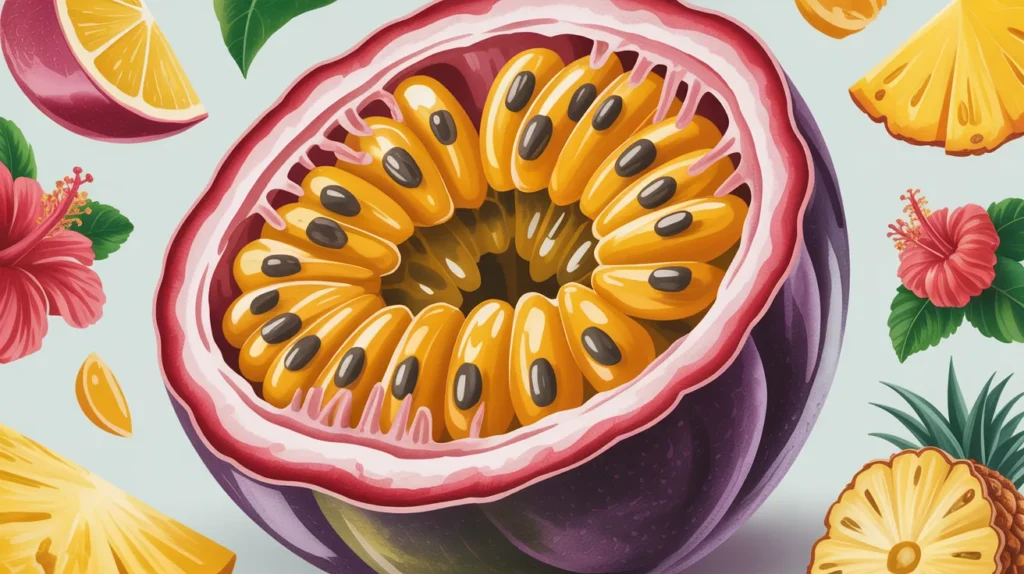
Purple Passion Fruit
- Sweeter
- Less acidic
- More aromatic
- Preferred for fresh eating
Yellow Passion Fruit
- Larger size
- More tart and acidic
- Less sweet
- Commonly used for juice and sauces
If you are tasting passion fruit for the first time, purple varieties are usually more approachable.
How Ripeness Affects Taste
Just like with many fruits, ripeness is critical.
Underripe Passion Fruit
- Very sour
- Less aromatic
- Firmer pulp
- Less enjoyable raw
Perfectly Ripe Passion Fruit
- Wrinkled skin
- Strong aroma
- Balanced sweet-tart flavor
- Juicy pulp
Overripe Passion Fruit
- Extremely soft
- Fermented or wine-like taste
- Possible bitterness
Visual cue: Wrinkled skin is good. Smooth skin usually means underripe.
Visual and Sensory Cues of Good Flavor
When evaluating passion fruit, look for:
- Deep purple or golden yellow skin
- Wrinkled, dimpled exterior
- Heavy weight for its size
- Strong fruity aroma
Avoid fruits that smell moldy or alcoholic unless fermentation is intended.
What Does Passion Fruit Taste Like Compared to Other Fruits?
People often ask for comparisons. Here are realistic ones:
- Like mango?
Less sweet, more acidic - Like pineapple?
Similar tang, more floral - Like orange?
Sharper and more aromatic - Like guava?
Very similar in aroma, more tart
No single fruit perfectly matches passion fruit—it’s a unique hybrid of flavors.
Raw vs Cooked Passion Fruit: Does the Taste Change?
Raw Passion Fruit
- Bright and sharp
- Fresh acidity
- Best for toppings and eating plain
Cooked Passion Fruit
- Milder acidity
- Slightly sweeter perception
- Deeper aroma
Cooking mellows the sharp edges but preserves the tropical character.
Why Passion Fruit Is Used in So Many Foods
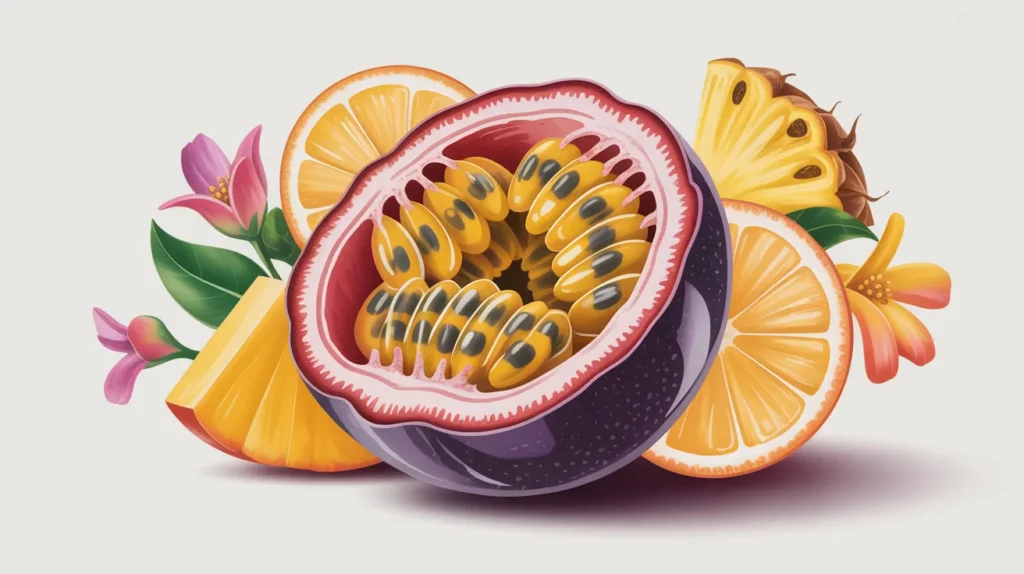
The flavor profile makes passion fruit extremely versatile.
It works well because it:
- Balances rich desserts
- Enhances beverages
- Adds complexity to savory dishes
- Pairs well with dairy, sugar, and spice
This is why it’s common in yogurts, cheesecakes, cocktails, and sauces.
How to Eat Passion Fruit and Enjoy the Taste
Simple Method
- Cut the fruit in half
- Scoop out the pulp
- Eat with a spoon
Ways to Adjust the Flavor
If it’s too sour:
- Add honey or sugar
- Mix into yogurt
- Combine with sweeter fruits
If you love tart flavors, eat it plain.
Common First-Time Reactions
Many first-time eaters report:
- Surprise at the sourness
- Love for the aroma
- Uncertainty about the seeds
This is normal. Passion fruit is intense, not subtle.
Is Passion Fruit Supposed to Taste Sour?
Yes—to an extent.
Sourness is natural and expected. However:
- Extremely sour = underripe
- Bitter or alcoholic = overripe
Proper ripeness brings balance, not harshness.
Where Passion Fruit Can Be Found or Live
Passion fruit grows on climbing vines in warm climates.
Natural Growing Environments
- Tropical regions
- Subtropical climates
- Areas with good drainage and sunlight
Common Regions
- South America (native range)
- Australia
- New Zealand
- South Africa
- Southeast Asia
- Parts of the United States (Florida, California, Hawaii)
Cultivated Settings
- Home gardens
- Commercial orchards
- Greenhouses in cooler climates
The vine thrives on trellises, fences, and supports.
Nutritional Notes That Influence Taste
While not a nutrition article, it’s useful to know:
- High vitamin C contributes to tartness
- Natural sugars balance acidity
- Aromatic compounds enhance perceived sweetness
This explains why passion fruit tastes so vivid even in small amounts.
When Passion Fruit Doesn’t Taste Good
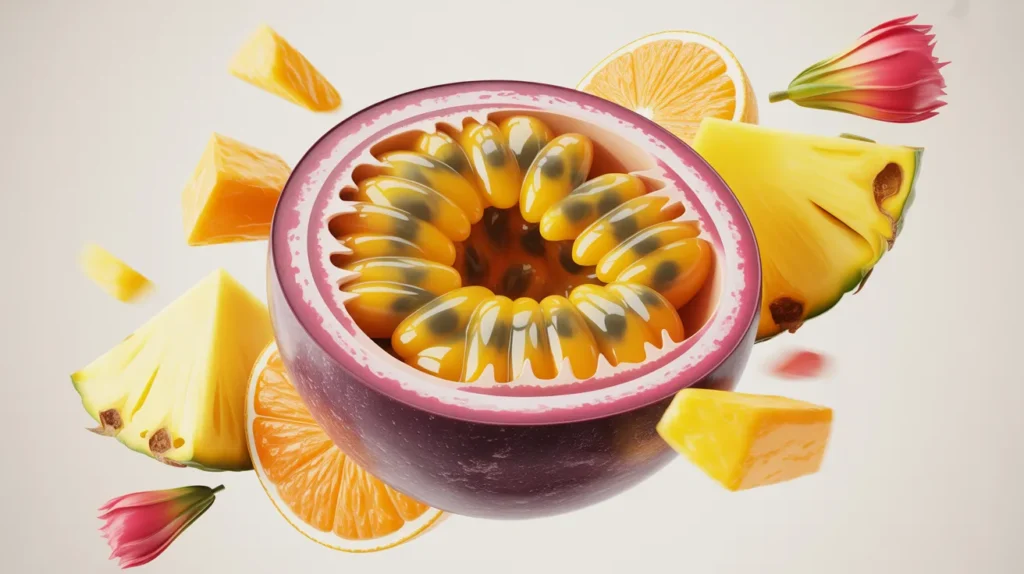
Occasionally, people encounter unpleasant flavors.
Possible Causes
- Underripe fruit
- Poor storage
- Overripeness
- Low-quality variety
Symptoms of Bad Fruit
- Moldy smell
- Slimy pulp
- Bitter aftertaste
- Alcohol-like aroma
Discard fruit showing these signs.
Tips for Choosing the Best-Tasting Passion Fruit
- Choose wrinkled skin
- Avoid very light fruits
- Smell before buying if possible
- Store at room temperature until ripe
These small steps greatly improve flavor experience.
Passion Fruit Taste in Drinks
In beverages, passion fruit becomes:
- Less sharp
- More refreshing
- Intensely aromatic
This is why it’s popular in juices, mocktails, and cocktails.
Can Children Enjoy the Taste?
Many children enjoy passion fruit when:
- Mixed with yogurt
- Sweetened slightly
- Used in smoothies
Plain pulp may be too tart for some younger palates.
Frequently Asked Questions (FAQ)
Does passion fruit taste sweet or sour?
Passion fruit tastes both sweet and sour, with tartness usually more noticeable. Ripeness determines the balance.
Is passion fruit an acquired taste?
For some people, yes. Its intensity can be surprising at first, but many grow to love it quickly.
Are the seeds supposed to be eaten?
Yes. The seeds are edible, crunchy, and safe to consume.