

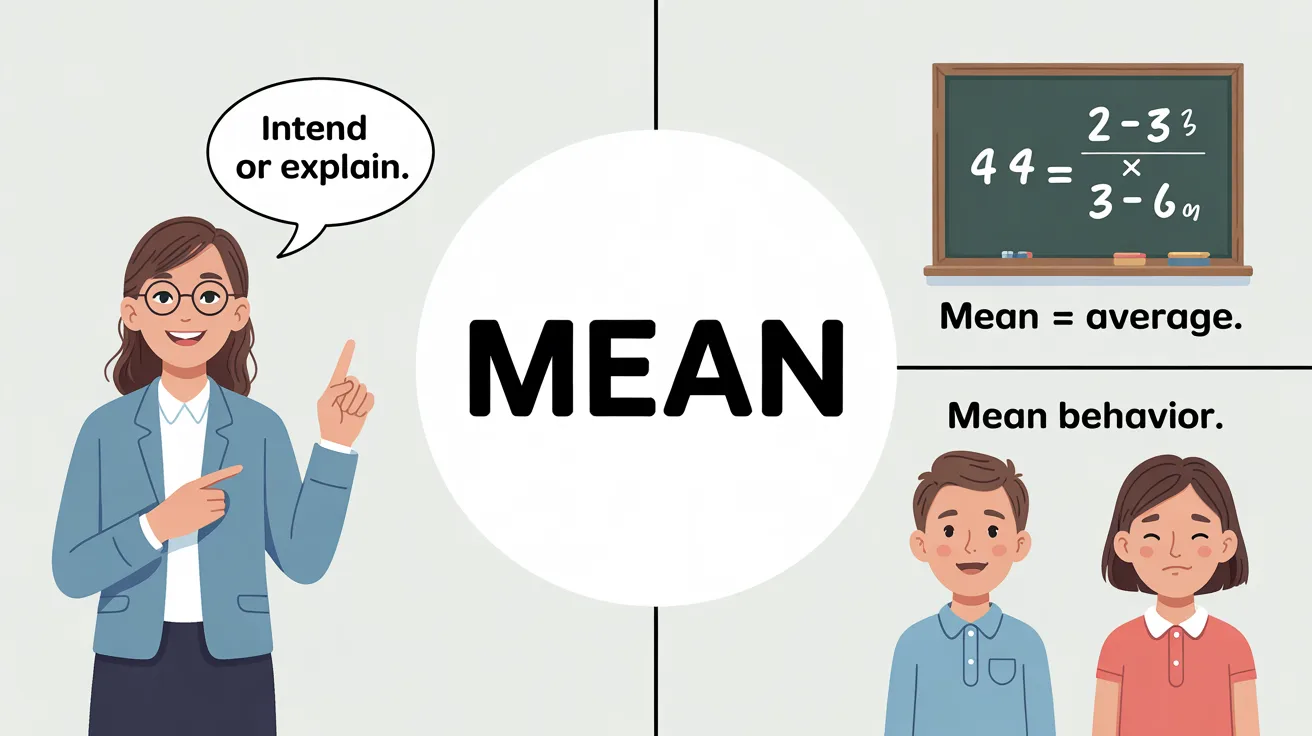
Understanding the word “mean” might seem simple at first glance, but this small word carries multiple meanings, emotional layers, mathematical uses, and social implications. Much like a common household pet that behaves differently depending on the situation, “mean” can change its role based on context.
In this comprehensive guide, we’ll explore what “mean” means, how it’s used in daily language, academics, emotions, and statistics, and how to recognize its different “behaviors” in the wild. Whether you’re a student, writer, English learner, or just curious, this article will help you confidently interpret and use the word mean.
Quick Definition: What Does “Mean” Mean?
At its core, “mean” is a versatile English word that can function as:
- A verb (to intend or signify)
- An adjective (to describe unkind behavior)
- A noun (a mathematical average)
Because it has multiple definitions, understanding mean requires paying close attention to context, much like observing an animal’s posture before assuming its mood.
The Origins of the Word “Mean”
The word mean comes from the Old English mænan, meaning “to intend” or “to signify.” Over centuries, it evolved to include emotional, mathematical, and descriptive meanings.
Why Etymology Matters
Knowing where a word comes from helps explain why it behaves the way it does today—similar to understanding a pet’s breed before predicting its temperament.
The Main Meanings of “Mean” Explained
1. “Mean” as a Verb (To Intend or Signify)
This is one of the most common uses.
Definition:
To express, indicate, or intend something.
Examples:
- “What do you mean by that?”
- “I didn’t mean to upset you.”
- “This sign means danger.”
Visual Cue:
Think of a pointing gesture 👉 — directing attention to a specific idea.
Tips for Use:
- Often followed by to or that
- Common in explanations and clarifications
2. “Mean” as an Adjective (Unkind or Cruel)
This is the emotional version of mean.
Definition:
Behaving in a cruel, rude, or spiteful way.
Examples:
- “That dog was mean and aggressive.”
- “It was mean to laugh at her mistake.”
- “He has a mean streak.”
Symptoms of This Meaning:
- Hurt feelings
- Raised voices
- Defensive body language
Visual Cue:
A frowning face 😠 or crossed arms
Practical Advice:
If someone is described as mean, it usually reflects behavior, not identity. Just like animals, people can act out due to stress, fear, or misunderstanding.
3. “Mean” in Mathematics (The Average)
In math and statistics, mean has a precise, neutral meaning.
Definition:
The average of a set of numbers, calculated by adding them together and dividing by how many numbers there are.
Example:
Numbers: 2, 4, 6
Mean = (2 + 4 + 6) ÷ 3 = 4
Visual Cue:
A balanced scale ⚖️
Helpful Tip:
The mean can be affected by extreme values, unlike the median or mode.
4. “Mean” as an Adjective (Low Quality or Inferior)
Less common but still important.
Definition:
Poor in quality, shabby, or unimpressive.
Examples:
- “They lived in a mean little house.”
- “He survived on a mean income.”
This usage is more common in older literature or formal writing.
Emotional and Social Uses of “Mean”
Is “Mean” Always Negative?
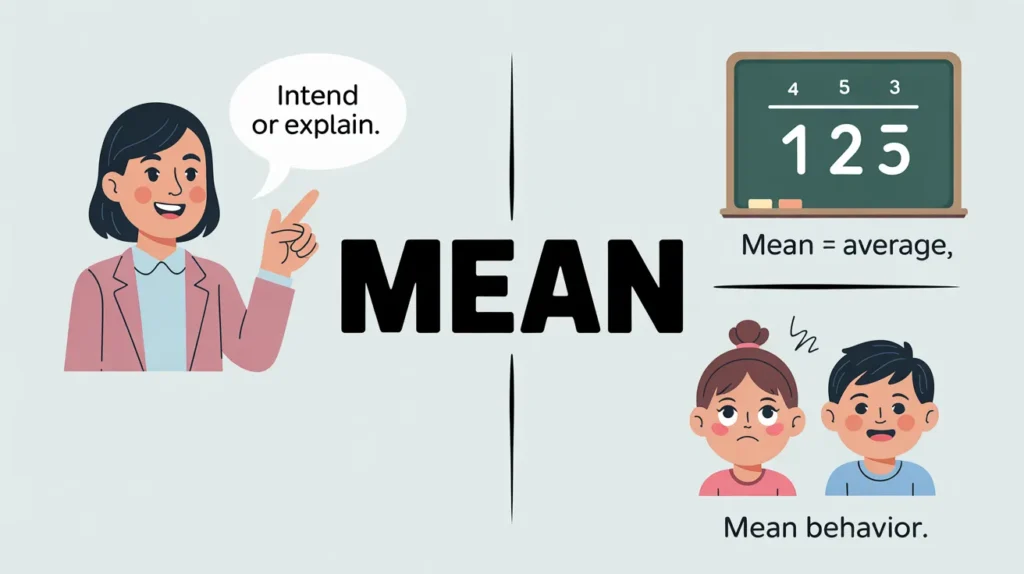
No. Context determines whether mean is neutral, negative, or technical.
| Context | Emotional Tone |
|---|---|
| “What do you mean?” | Neutral |
| “She is mean” | Negative |
| “Find the mean” | Neutral/Academic |
How to Tell Which Meaning Is Being Used
Much like diagnosing a pet’s behavior, identifying the meaning of mean involves observing clues.
Context Clues to Watch For
- Surrounding words
- Tone of voice
- Subject matter (math vs emotions)
- Sentence structure
Example:
- “That teacher is mean.” → Personality trait
- “The mean temperature is 25°C.” → Statistical average
Common Mistakes People Make With “Mean”
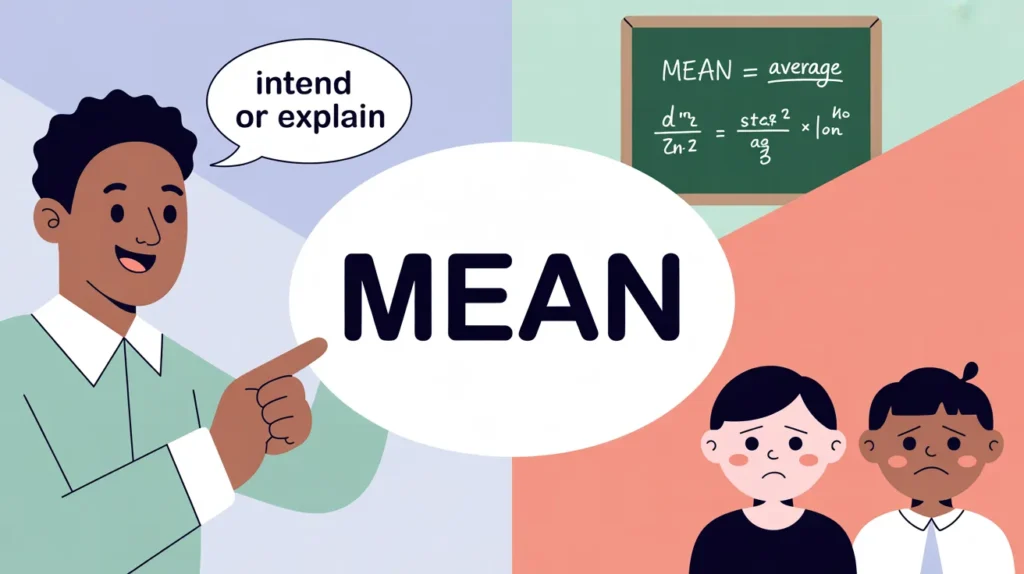
1. Confusing Emotional and Mathematical Meanings
- ❌ “The mean of the numbers is rude.”
- ✅ “The mean of the numbers is high.”
2. Overusing “Mean” Instead of Specific Words
Instead of:
- “He’s mean.”
Try:
- “He’s impatient.”
- “He’s sarcastic.”
- “He’s aggressive.”
Specific language improves clarity—just like precise veterinary notes improve treatment.
Practical Tips for Using “Mean” Correctly
- Pause and identify the context
- Ask yourself: Is this emotional, informational, or numerical?
- Replace mean with a synonym to test clarity
Synonym Test Example:
- If mean = average, it’s mathematical
- If mean = intend, it’s verbal
- If mean = cruel, it’s descriptive
Where “Mean” Can Be Found or Live
Although mean is not a living creature, it inhabits many environments, much like a highly adaptable species.
Common Habitats of the Word “Mean”
- Everyday conversations
- Classrooms and textbooks
- Social media comments
- Workplace communication
- Literature and storytelling
- Mathematics and science papers
Hosts That Carry “Mean”
- Students
- Teachers
- Writers
- Statisticians
- Children learning language
Environmental Adaptability:
The word mean thrives in both casual and formal settings, making it one of the most flexible words in the English language.
“Mean” in Digital and Online Communication
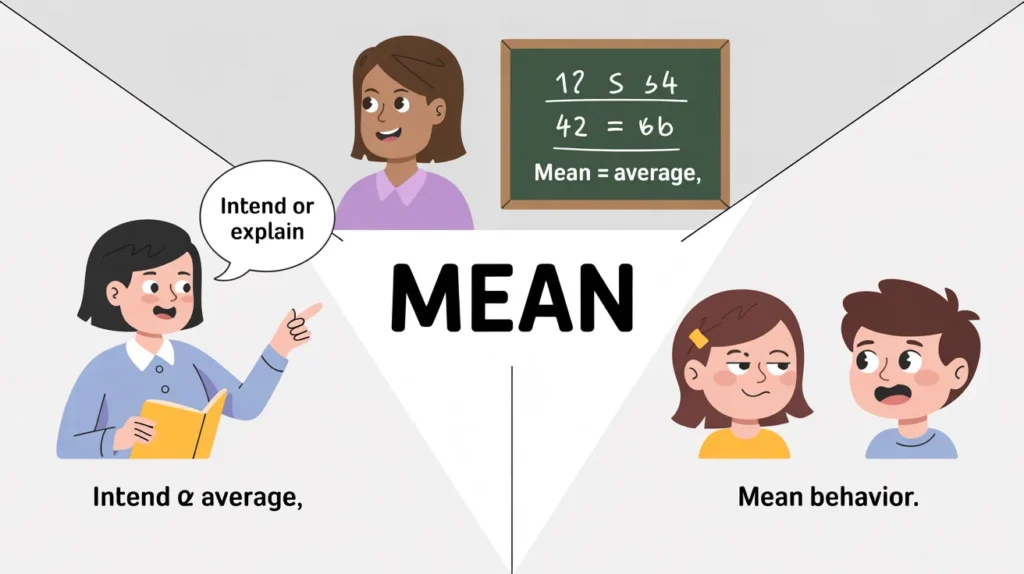
Online, mean often takes on an emotional charge.
Examples:
- “That comment was mean.”
- “Why are people so mean online?”
Tip for Readers:
Tone is harder to detect online. What seems mean may simply be poorly phrased.
Cultural Differences in the Use of “Mean”
In some cultures:
- Direct speech may sound mean but isn’t intended that way
- Humor or sarcasm can be misunderstood
Understanding cultural context prevents unnecessary emotional reactions.
Teaching Children the Meaning of “Mean”
Much like training a young pet, teaching children the word mean requires patience.
Helpful Strategies:
- Use real-life examples
- Discuss feelings
- Separate actions from identity (“That was mean” vs “You are mean”)
Frequently Asked Questions (FAQ)
1. What does “mean” usually mean in conversation?
Most often, it means to intend or to explain something, as in “What do you mean?”
2. Is being “mean” a personality trait?
Not always. It usually refers to behavior, which can change depending on mood or circumstances.
3. What is the difference between mean, median, and mode?
- Mean: Average
- Median: Middle value
- Mode: Most frequent value
Final Thoughts
The word “mean” may be small, but it’s incredibly powerful and adaptable. Understanding its many meanings helps prevent miscommunication, improves clarity, and builds emotional intelligence.
Just like caring for an animal requires observation and context, understanding mean requires attention, patience, and awareness.