

Language can sometimes feel like a living creature—evolving, adapting, and occasionally confusing. Some words sound familiar but behave differently depending on where and how they’re used. “Fortnight” is one of those words.
You may have seen it in books, heard it in British shows, or stumbled across it online and wondered:
What does fortnight actually mean?
Is it formal? Old-fashioned? Still used today?
This guide breaks down everything you need to know about the word “fortnight”, using clear explanations, real-world examples, and practical tips—just like a trusted care manual would.
What Does Fortnight Mean?
At its core, fortnight means:
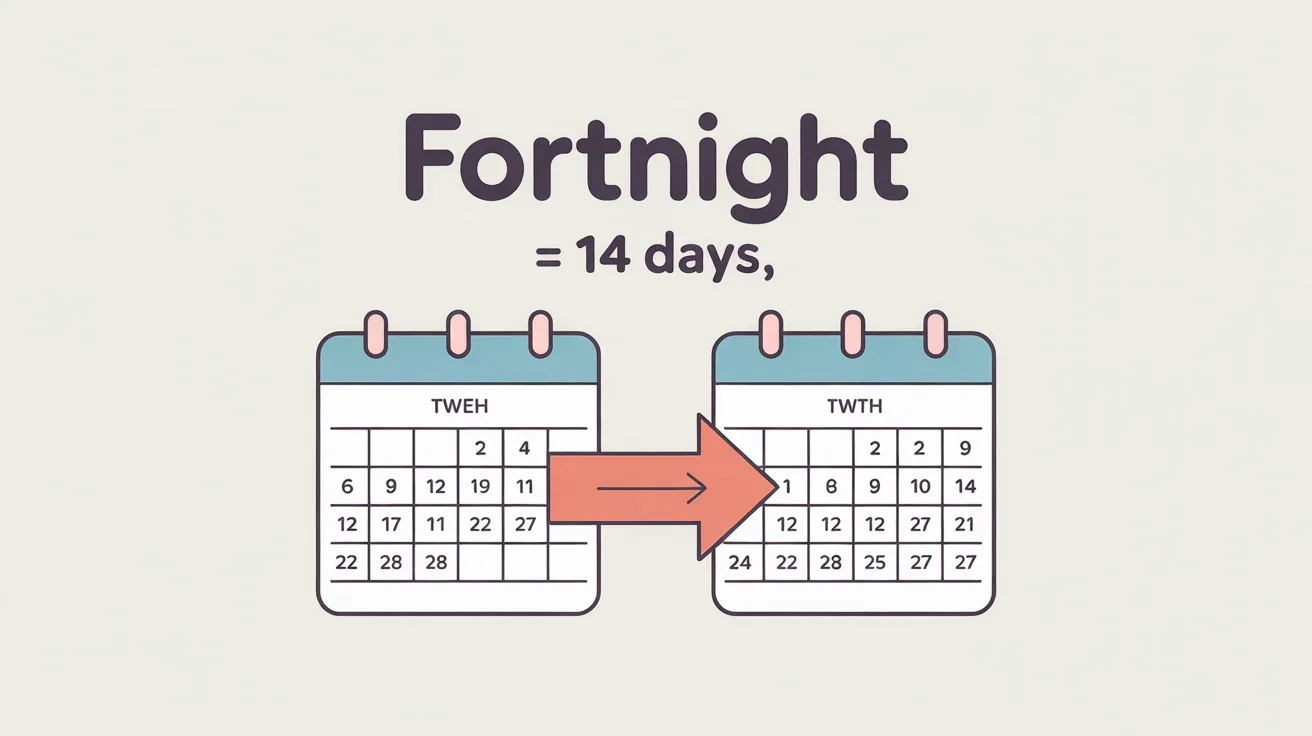
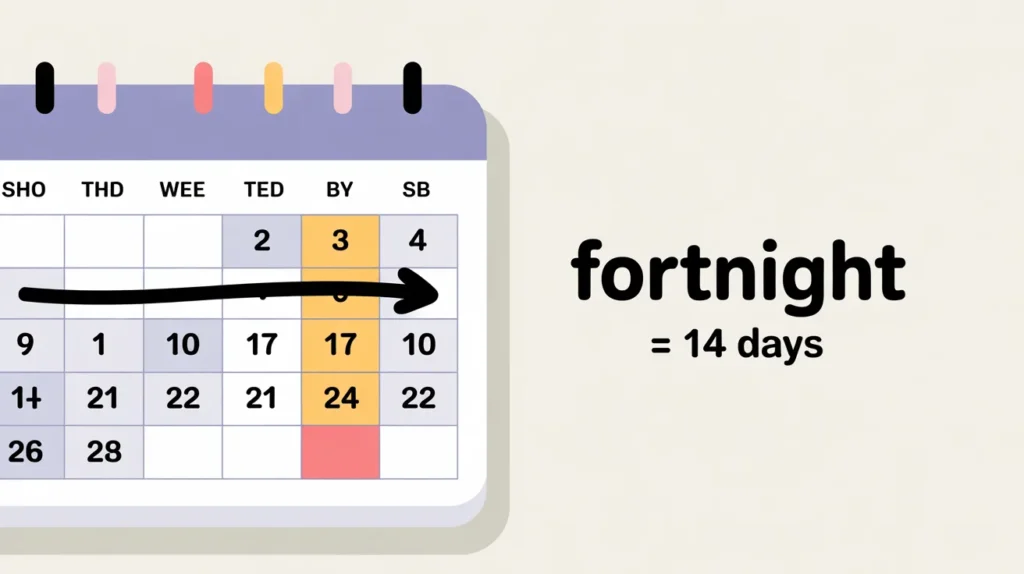
A period of two weeks, or 14 consecutive days
That’s it—simple, precise, and surprisingly useful.
Quick Definition Snapshot
- Word: Fortnight
- Meaning: Two weeks
- Length: 14 days
- Usage: Common in British English
- Tone: Neutral to slightly formal
If someone says, “I’ll see you in a fortnight,” they mean they’ll see you in two weeks.
The Origin of the Word “Fortnight”
Understanding where a word comes from helps explain how and why it behaves the way it does—much like knowing an animal’s breed explains its habits.
Etymology: Breaking the Word Down
The word fortnight comes from Old English:
- “Feowertyne niht”
- Feowertyne = fourteen
- Niht = night
Over time, “fourteen nights” shortened into fortnight.
Why Nights Instead of Days?
In older societies:
- Time was often measured by nights, not days
- Many cultures counted from sunset to sunset
- Lunar cycles influenced calendars
So, a fortnight originally meant fourteen nights, which naturally equals fourteen days.
How Long Is a Fortnight Exactly?
Let’s clarify this clearly—no guesswork needed.
A Fortnight Equals:
- ✅ 14 days
- ✅ 2 weeks
- ❌ Not 10 days
- ❌ Not “about” two weeks
- ❌ Not flexible
A fortnight is always precise.
Visual Timeline Example
If today is March 1:
- One week later → March 8
- One fortnight later → March 15
Is “Fortnight” Still Used Today?
Yes—very much so.
However, where you live matters.
Common Usage by Region
United Kingdom
- Extremely common
- Used in daily conversation, news, and business
- Example: “I’m on holiday for a fortnight.”
Australia & New Zealand
- Very common
- Used casually and professionally
India, Pakistan, South Africa
- Common in formal writing and education
- Understood by most English speakers
United States
- Rare in daily speech
- Often understood but sounds old-fashioned or literary
Fortnight vs Two Weeks: Is There a Difference?
Functionally? No.
Stylistically? Yes.
Comparison Table
| Term | Meaning | Tone | Usage |
|---|---|---|---|
| Fortnight | 14 days | Slightly formal | British English |
| Two weeks | 14 days | Casual | Global English |
When to Use Each
Use fortnight when:
- Writing formally
- Communicating with British audiences
- You want concise language
Use two weeks when:
- Speaking casually
- Writing for American readers
- Clarity is the priority
How Is “Fortnight” Used in Sentences?
Let’s explore how this word behaves “in the wild.”
Everyday Examples
- “The package will arrive in a fortnight.”
- “She visits her parents every fortnight.”
- “The course runs for a fortnight.”
Professional & Formal Examples
- “Employees are paid on a fortnightly basis.”
- “The committee will reconvene in a fortnight.”
- “The trial period lasts one fortnight.”
Related Words and Forms of Fortnight
Just like animals have related species, words have related forms.
Fortnightly
- Meaning: Every two weeks
- Usage: Schedules, payments, publications
Examples:
- “He receives his salary fortnightly.”
- “The magazine is published fortnightly.”
Is There a “Fortnighted” or “Fortnighting”?
No.
“Fortnight” does not commonly take verb forms.
Common Misunderstandings About Fortnight
Even simple words can cause confusion.
Myth 1: Fortnight Means Ten Days
❌ Incorrect
This confusion often comes from mixing it up with:
- Fortnight ≠ workweek
- Fortnight ≠ business days
Myth 2: Fortnight Is Old or Obsolete
❌ Not true
It’s actively used in many English-speaking regions.
Myth 3: Fortnight Is Informal Slang
❌ Incorrect
It’s a standard dictionary word.
Symptoms of Misunderstanding “Fortnight”
(Think of this like spotting signs your pet isn’t feeling well—early recognition matters!)
You might misunderstand “fortnight” if you:
- Feel unsure how many days it means
- Think it’s approximate instead of exact
- Avoid using it because it “sounds strange”
Visual Cues of Correct Understanding
- You immediately think “two weeks”
- You can place it correctly on a calendar
- You recognize it in writing without hesitation
Practical Tips for Using “Fortnight” Correctly
Tip 1: Always Think “14 Days”
Make it automatic.
Tip 2: Know Your Audience
- British readers? ✔️ Use it
- American readers? ⚠️ Consider “two weeks”
Tip 3: Use It for Scheduling
It’s especially helpful in:
- Payment cycles
- Rotating schedules
- Appointments
- Publishing timelines
Fortnight in Literature and Media
The word appears often in:
- British novels
- Historical fiction
- Newspapers
- Legal and academic writing
Example from Literature
“In a fortnight, the town had changed beyond recognition.”
It adds a slightly refined or traditional tone to writing.
Fortnight vs Similar Time Expressions
Let’s compare it to other time-related terms.
Comparison List
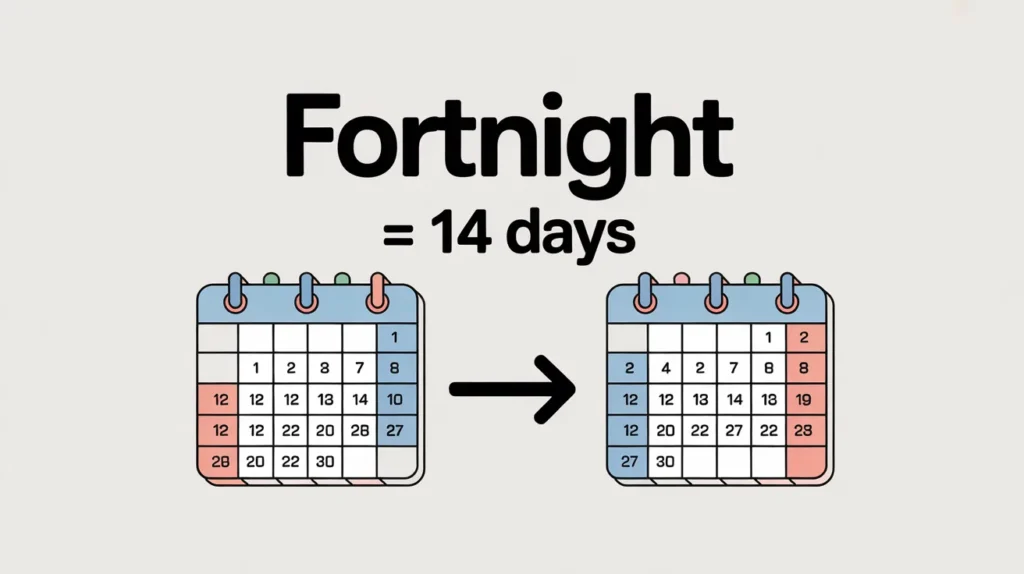
- Week: 7 days
- Fortnight: 14 days
- Month: 28–31 days
- Biweekly: Ambiguous (could mean twice a week or every two weeks)
👉 Fortnight avoids confusion, unlike “biweekly.”
Where “Fortnight” Can Be Found or Live
While “fortnight” isn’t a creature, it does have natural habitats—places where it thrives and is commonly used.
Primary Environments
- British English conversations
- Commonwealth countries
- Formal writing
- Academic and legal documents
- Employment contracts
Less Common Habitats
- Casual American speech
- Informal texting
Think of it like a well-adapted species—it thrives best in certain linguistic climates.
Is “Fortnight” the Same as the Game “Fortnite”?
No—but they are related.
Key Differences
- Fortnight: A time period (14 days)
- Fortnite (game): A video game name derived from “fortnight”
The game originally referenced 14-day survival cycles, though many players don’t realize this.
When Should You Avoid Using “Fortnight”?
Avoid it when:
- Writing for children unfamiliar with the term
- Speaking to non-native English learners
- Clarity is more important than style
In those cases, “two weeks” is safer.
Frequently Asked Questions (FAQ)
1. Does fortnight always mean exactly 14 days?
Yes. A fortnight is always two weeks—no more, no less.
2. Is fortnight British or American?
It’s primarily British English, though understood elsewhere.
3. Is fortnight formal?
It’s neutral to slightly formal, depending on context.
4. Can fortnight be plural?
Yes.
Example: “The project took several fortnights to complete.”
Final Thoughts: Why “Fortnight” Still Matters
“Fortnight” is:
- Precise
- Efficient
- Historically rich
- Still widely used
Understanding it helps you:
- Read more confidently
- Communicate clearly
- Sound natural in international English
Like a well-trained guide dog of language, it leads you exactly where you need to go—two weeks ahead.