

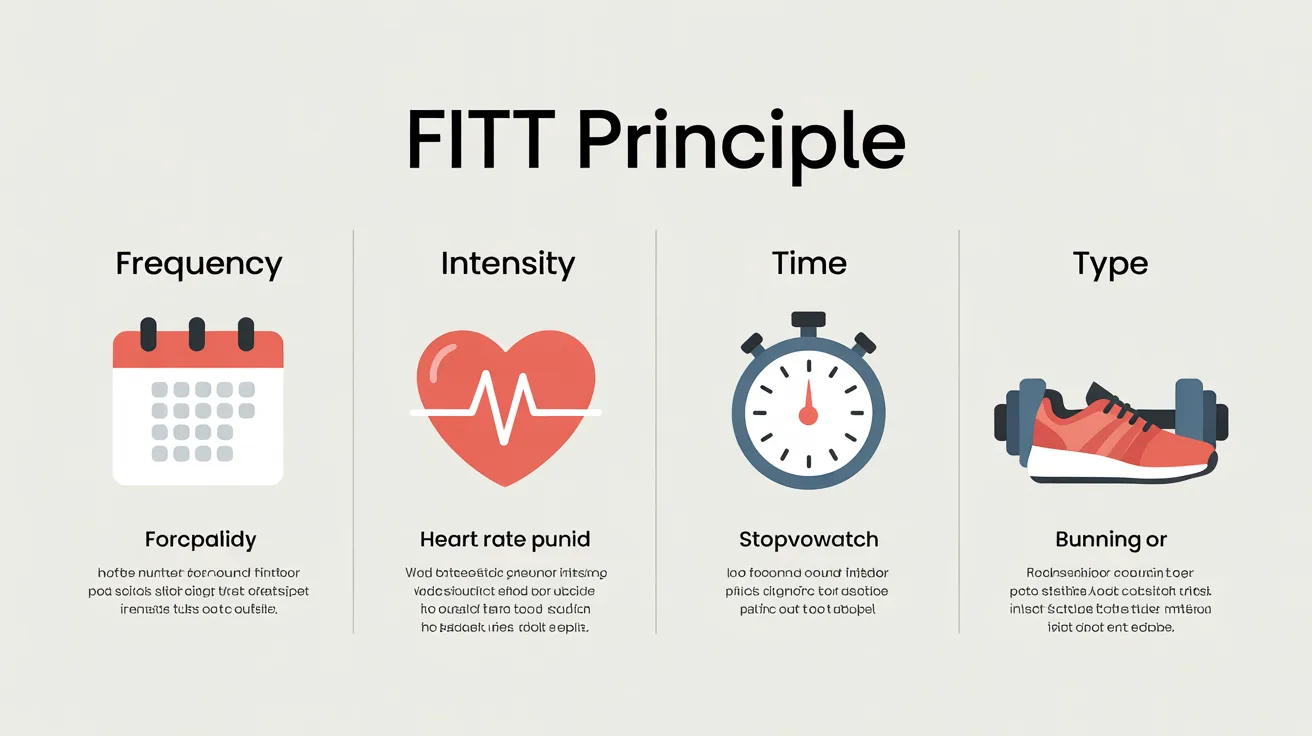
If you’ve ever started an exercise plan, worked with a trainer, or read fitness advice online, you’ve probably seen the term FITT. It may look simple, but it’s one of the most important frameworks in health and fitness.
So, what does FITT stand for?
FITT stands for:
- F – Frequency
- I – Intensity
- T – Time
- T – Type
Together, these four elements form the FITT Principle, a guideline used to design safe, effective, and personalized exercise programs.
In this article, we’ll break down each part in clear, practical terms—just like a good care guide—so you can understand not only what FITT means, but how to actually use it in real life.
What Is the FITT Principle?
The FITT Principle is a structured way to plan physical activity. Instead of guessing how often or how hard to exercise, FITT gives you a checklist to follow.
Think of FITT like a nutrition label for exercise:
- It tells you how often to move
- How hard to push
- How long to keep going
- And what kind of movement to do
This approach helps:
- Beginners avoid injury
- Experienced athletes improve performance
- Rehab patients recover safely
- Busy people stay consistent
Just like caring for a pet requires the right food, exercise, and routine, caring for your body requires balance—and FITT provides that balance.
Breaking Down FITT: One Letter at a Time
Let’s explore each part of FITT in detail.
F Is for Frequency
What Does Frequency Mean?
Frequency refers to how often you exercise.
It answers the question:
“How many days per week should I work out?”
Common Frequency Guidelines
- Cardio: 3–5 days per week
- Strength training: 2–4 days per week
- Flexibility: Daily or at least 3 days per week
Practical Tips for Frequency
- Beginners should start with fewer days and build up
- Rest days are essential for recovery
- Overtraining can lead to fatigue and injury
Visual Cues of Incorrect Frequency
Too much frequency may cause:
- Constant soreness
- Poor sleep
- Drop in motivation
- Increased injury risk
Too little frequency may cause:
- Slow progress
- Low endurance
- Inconsistent habits
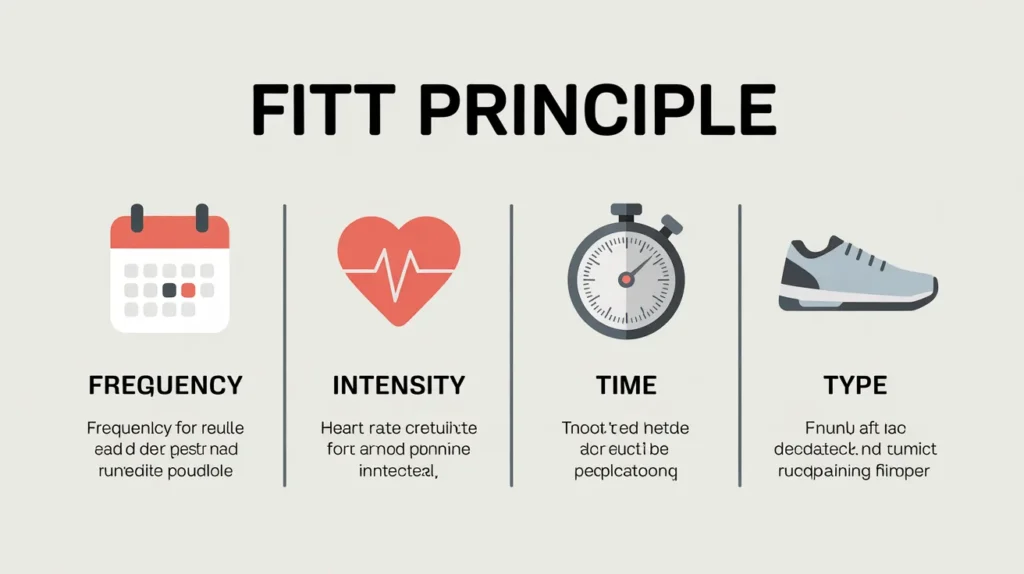
I Is for Intensity
What Does Intensity Mean?
Intensity describes how hard your body is working during exercise.
It’s often the most misunderstood part of FITT.
Ways to Measure Intensity
- Heart rate
- Breathing level
- Perceived effort (how hard it feels)
Common Intensity Levels
- Low: Walking, gentle stretching
- Moderate: Brisk walking, cycling
- High: Sprinting, HIIT, heavy lifting
Simple Intensity Test (Talk Test)
- Low intensity: You can sing
- Moderate intensity: You can talk, but not sing
- High intensity: Talking is difficult
Symptoms of Incorrect Intensity
Too intense:
- Dizziness
- Nausea
- Chest discomfort
- Burnout
Too easy:
- No increase in heart rate
- No strength or endurance gains
T Is for Time
What Does Time Mean?
Time refers to how long each exercise session lasts.
This includes:
- Warm-up
- Main workout
- Cool-down
General Time Recommendations
- Cardio: 20–60 minutes
- Strength training: 30–60 minutes
- Flexibility: 10–30 minutes
Tips for Managing Time
- Short workouts still count
- Quality matters more than duration
- Break sessions into smaller chunks if needed
Visual Signs of Poor Time Management
- Rushing through workouts
- Skipping warm-ups
- Ending sessions exhausted rather than energized
T Is for Type
What Does Type Mean?
Type refers to what kind of exercise you do.
This is the most flexible part of FITT—and often the most fun.
Common Exercise Types
- Cardio: Walking, running, swimming
- Strength: Weightlifting, resistance bands
- Flexibility: Yoga, stretching
- Balance: Tai chi, stability exercises
Choosing the Right Type
- Pick activities you enjoy
- Match type to goals
- Mix different types for balance
Signs You Need to Change Type
- Boredom
- Plateau in progress
- Repeated injuries
How the FITT Components Work Together
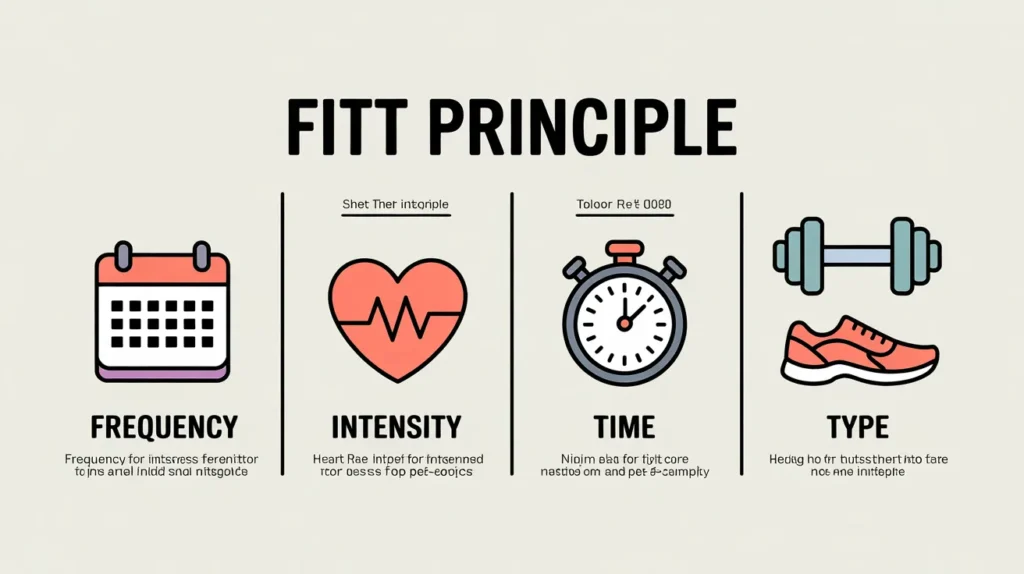
FITT isn’t meant to be used in isolation. Each element affects the others.
For example:
- Increasing intensity may require reducing frequency
- Longer time may require lower intensity
- Changing type may change optimal frequency
Think of FITT as a care plan—adjust one variable, and the others must adapt.
Examples of FITT in Real Life
Beginner Walking Program
- Frequency: 4 days/week
- Intensity: Moderate (brisk pace)
- Time: 30 minutes
- Type: Walking
Strength Training Plan
- Frequency: 3 days/week
- Intensity: Moderate-heavy weights
- Time: 45 minutes
- Type: Resistance training
Weight Loss Focus
- Frequency: 5 days/week
- Intensity: Moderate to high
- Time: 45–60 minutes
- Type: Cardio + strength
Common Mistakes When Using FITT
Many people misunderstand or misuse FITT. Here are common errors:
- Ignoring rest days
- Increasing intensity too fast
- Doing only one type of exercise
- Copying someone else’s plan without adjustment
Just like animal care, individual needs matter.
Who Should Use the FITT Principle?
The FITT principle is suitable for:
- Beginners
- Athletes
- People recovering from injury
- Busy professionals
- Students
It can be adapted to nearly any fitness level.
Where FITT Can Be Found or Live
Although FITT isn’t a living creature, it “lives” wherever structured movement exists.
Common Places FITT Is Used
- Gyms and fitness centers
- Physical therapy clinics
- Schools and sports programs
- Home workout plans
- Corporate wellness programs
Who Uses FITT Regularly?
- Personal trainers
- Physical therapists
- Coaches
- Doctors and rehab specialists
Anywhere exercise is planned thoughtfully, FITT is present.
How to Adjust FITT Over Time
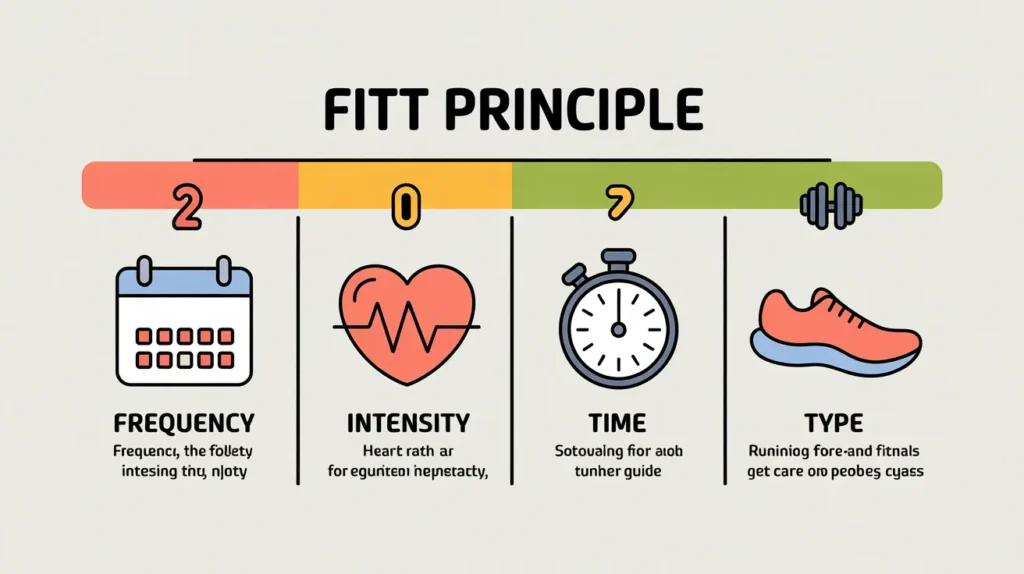
As your fitness improves, your FITT plan should evolve.
Signs It’s Time to Adjust
- Workouts feel too easy
- Progress has stalled
- Goals have changed
Safe Adjustment Tips
- Change one element at a time
- Increase gradually
- Monitor how your body responds
FITT and Injury Prevention
Using FITT correctly helps prevent injuries by:
- Avoiding overload
- Encouraging recovery
- Promoting balanced movement
Warning signs to stop or adjust:
- Sharp pain
- Swelling
- Persistent soreness
- Fatigue that lasts days
FITT vs Other Fitness Principles
FITT is often paired with:
- Progressive overload
- Specificity
- Recovery principles
But FITT remains the foundation—simple, flexible, and effective.
Frequently Asked Questions (FAQ)
What does FITT stand for in fitness?
FITT stands for Frequency, Intensity, Time, and Type. These four components help structure exercise programs safely and effectively.
Is the FITT principle only for beginners?
No. FITT is used by beginners, athletes, and professionals alike. It adapts easily to any fitness level.
Can I use FITT for weight loss?
Yes. FITT is commonly used in weight-loss plans by adjusting frequency, intensity, and exercise type.
How often should I change my FITT plan?
Most people adjust their FITT plan every 4–8 weeks, depending on progress and goals.
Final Thoughts: Why FITT Matters
The FITT principle turns exercise from guesswork into a clear, manageable routine.
It helps you: