

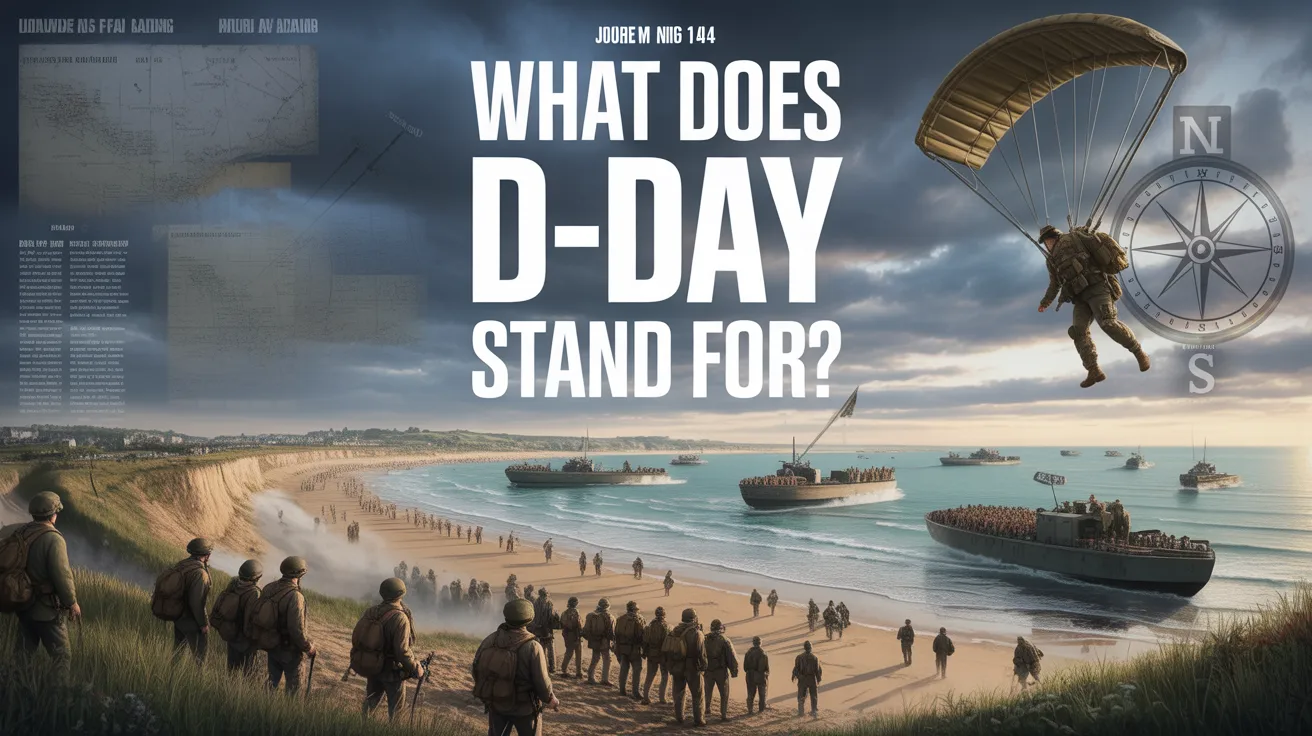
The term “D-Day” is one of the most recognizable phrases in modern history. You’ve probably heard it in history class, movies, documentaries, news articles, or even casual conversations. But what does D-Day actually stand for? Does the “D” mean something specific? And why has this term become so closely associated with World War II?
In this detailed guide, we’ll explore what D-Day stands for, where it comes from, how it’s used, and why it still matters today. Think of this article as a care guide for a historical term—we’ll examine its background, behaviors, symptoms of misunderstanding, and best practices for using it correctly.
Quick Overview: What Does D-Day Stand For?
D-Day stands for “Day-Day.”
That may sound strange at first, but it’s intentional. In military planning, D-Day is a placeholder term used to refer to the day an important military operation begins. The “D” does not stand for “Decision,” “Doom,” “Deliverance,” or “Departure,” even though many people assume it does.
Instead, D-Day simply means “the day.”
Understanding D-Day Like a Care Guide
Just like a pet or living system, historical terms need:
- Proper understanding
- Correct handling
- Clear identification
- Contextual awareness
Misusing or misunderstanding D-Day is common, but with the right guidance, it’s easy to get it right.
The Origin of the Term D-Day
Military Planning Basics
Before modern technology, military planners needed a way to:
- Schedule operations without revealing exact dates
- Coordinate complex actions across many units
- Adjust timelines if plans changed
So they created placeholder terms.
Common Military Placeholders
| Term | Meaning |
|---|---|
| D-Day | The day an operation begins |
| H-Hour | The hour an operation begins |
| D-1 | One day before D-Day |
| D+1 | One day after D-Day |
This system allowed commanders to update plans without rewriting entire documents.
Why Is D-Day Famous?
The Normandy Landings (June 6, 1944)
While D-Day can apply to any military operation, it became world-famous because of one specific event:
The Allied invasion of Normandy during World War II
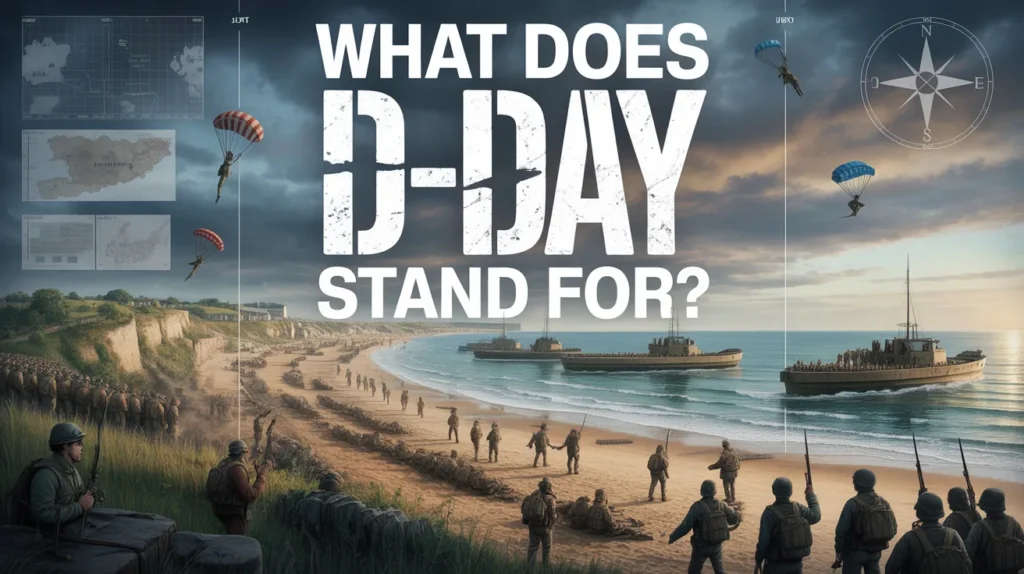
On June 6, 1944, Allied forces landed on the beaches of Nazi-occupied France. This operation was officially called Operation Overlord, and its naval assault phase was known as Operation Neptune.
Over time, people began using “D-Day” almost exclusively to refer to this event.
Visual Cue: What People Usually Mean by D-Day
When most people say “D-Day,” they picture:
- Soldiers storming beaches
- Landing crafts opening under fire
- Paratroopers dropping from the sky
- Beaches named Omaha, Utah, Gold, Juno, and Sword
This mental image is powerful—and it’s why the term feels so emotionally charged.
Does the “D” Stand for Anything Else?
Common Myths and Misunderstandings
Many people believe:
- D = Decision
- D = Deliverance
- D = Doom
- D = Destiny
These are myths.
The Real Meaning (Simple Explanation)
Military manuals confirm:
- D = Day
- It’s a neutral, flexible label
- It avoids revealing exact dates
Think of it like saying:
“The big day” instead of “June 6”
Symptoms of D-Day Confusion (Yes, Really)
Just like a misdiagnosed condition, misunderstanding D-Day shows certain signs:
Common “Symptoms”
- Thinking D-Day only refers to World War II
- Believing the “D” has a secret meaning
- Using D-Day for trivial events incorrectly
- Assuming it always means something dramatic
Recognizing these symptoms helps prevent misuse.
How D-Day Is Used in Military Contexts
Step-by-Step Planning Example
Imagine a military operation planned for an unknown date.
- D-5: Supplies arrive
- D-2: Troops mobilize
- D-Day: Operation begins
- D+3: Reinforcements arrive
If the date changes, planners only update one variable, not the entire plan.
D-Day vs H-Hour: What’s the Difference?
| Term | Purpose |
|---|---|
| D-Day | The day an operation begins |
| H-Hour | The exact hour it begins |
They are often used together, especially in large operations.
Civilian and Modern Usage of D-Day
How the Term Escaped the Military
Over time, D-Day entered everyday language.
Examples:
- “D-Day for the product launch is Monday.”
- “Exam D-Day is finally here.”
- “Today is D-Day for the big decision.”
Is This Usage Correct?
Practical Advice
It’s acceptable informally, but context matters.
Appropriate uses:
- Serious deadlines
- Major turning points
- High-stakes moments
Avoid using it for:
- Small errands
- Casual plans
- Lighthearted events
Where D-Day Can Be Found or Live
While D-Day is not a living organism, it “lives” and appears in specific environments, much like a species has preferred habitats.
Common Environments Where D-Day Is Found
- Military manuals and doctrine
- History textbooks
- World War II documentaries
- Museums and memorials
- Academic lectures
- Political speeches
- News headlines
Digital Habitats
- Online articles
- Educational websites
- Historical archives
- Social media discussions (often simplified)
Think of D-Day as a term that thrives in educational and historical ecosystems.
Why D-Day Still Matters Today
Historical Importance
D-Day:
- Marked the beginning of the end of Nazi occupation in Western Europe
- Changed the course of World War II
- Demonstrated unprecedented international cooperation
Cultural Importance
- Symbolizes courage and sacrifice
- Represents turning points
- Serves as shorthand for decisive moments
Practical Tips for Using “D-Day” Correctly
Do This
- Use it for major, defining moments
- Clarify context if needed
- Capitalize it in formal writing
Avoid This
- Overusing it casually
- Assuming everyone knows what you mean
- Treating it as a dramatic buzzword
Examples of Correct Usage
- “June 6, 1944, is remembered as D-Day.”
- “For the company, launch day became their D-Day.”
- “The general postponed D-Day due to weather conditions.”
Visual Cue: How to Remember the Meaning
A simple memory trick:
D-Day = Day-Day = The Day
No hidden meaning. No secret code.
Frequently Asked Questions (FAQ)
1. Does D-Day only refer to World War II?
No. While it’s most famous for the Normandy landings, D-Day can refer to any military operation’s start date.
2. Why didn’t they use the actual date instead?
Using placeholders:
- Prevented leaks
- Allowed flexibility
- Simplified planning
3. Is it wrong to use D-Day in everyday language?
Not wrong, but it should be used thoughtfully and for significant events.
4. Was D-Day the turning point of World War II?
Many historians consider it one of the most important turning points, especially in Western Europe.
Key Takeaways
- D-Day stands for “Day-Day,” meaning “the day an operation begins.”
- It originated as a military planning tool
- It became famous due to June 6, 1944
- It’s now widely used in both formal and informal contexts
- Understanding its meaning prevents misuse and confusion