


Chamoy is one of the most intriguing flavors in Mexican cuisine. Its unique taste has captivated food lovers across the globe, often leaving newcomers both curious and surprised. But what exactly does chamoy taste like, and why has it become such a staple in Mexican snacks, candies, and beverages? In this comprehensive guide, we’ll explore everything from the flavor profile to how it’s made, where it can be found, and how you can enjoy it at home.
Understanding Chamoy
Chamoy is a condiment, sauce, or syrup made primarily from pickled fruit, chili, lime, and salt. Though its ingredients may vary, chamoy is always a balance of sweet, sour, salty, and spicy flavors. Its versatility allows it to enhance fruits, candies, chips, beverages, and even ice cream.
The origin of chamoy is often traced back to Asian influence in Mexico, particularly from the Chinese introduction of preserved fruits. Over time, Mexican cuisine adapted these techniques to create the uniquely tangy, spicy, and sweet flavor we know today.
Flavor Profile of Chamoy
Chamoy’s taste can be described as a harmonious blend of contrasting sensations:
- Sweet – Often derived from sugar or fruit such as apricot, mango, or plum.
- Sour/Tangy – Comes from lime juice or vinegar used in the pickling process.
- Salty – Salt enhances the depth of the flavor and balances the sweetness.
- Spicy – Mild to moderate chili heat provides a warming sensation without overwhelming the palate.
Imagine biting into a slice of mango sprinkled with chili powder and lime; chamoy captures that same vibrant combination of flavors in a smooth or syrupy form.
Key Tasting Notes
- First Bite: Sweet and fruity with a hint of acidity.
- Mid-Taste: The sour and salty notes emerge, giving a complex, layered sensation.
- Aftertaste: A lingering spiciness that tickles the tongue and leaves a refreshing, slightly smoky flavor.
Some describe it as a “rollercoaster for the taste buds” because of the sequence of flavors that hit almost simultaneously.
Visual and Textural Cues
Chamoy isn’t just about taste—it’s also visually and texturally appealing.
- Color: Typically ranges from deep red to dark brown, depending on the fruit and chili used.
- Texture: Can vary from thick syrup to smooth liquid, and sometimes chunky when containing fruit pulp.
- Consistency: Sticky, slightly viscous, and perfect for drizzling over snacks or dipping fruits.
When you pour chamoy over a mango slice, for example, it coats the fruit, allowing the flavor to penetrate with each bite.
Common Ingredients in Chamoy
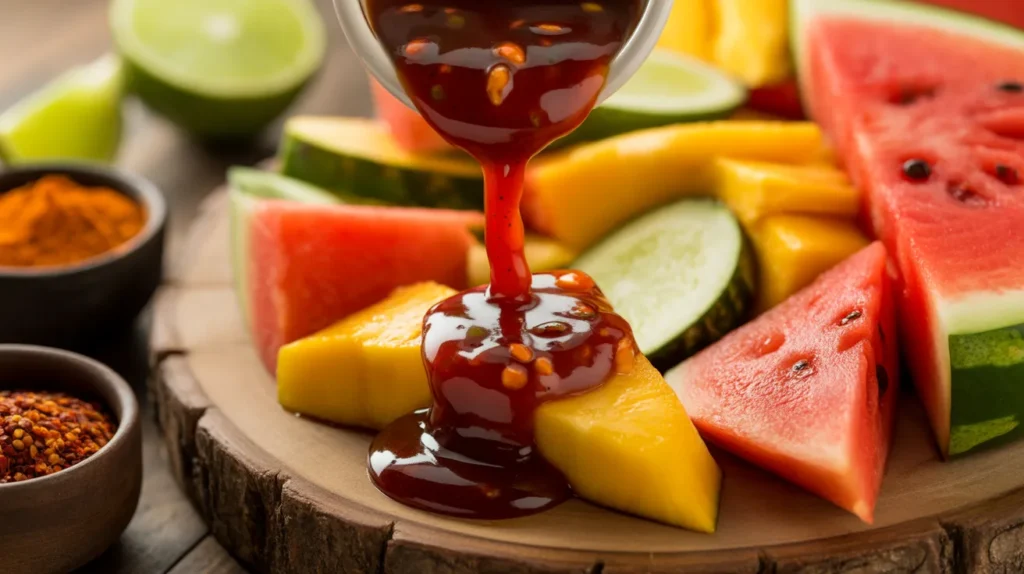
Chamoy can be made with various fruits and seasonings, depending on the region or brand. Common ingredients include:
- Fruits: Apricot, plum, mango, tamarind
- Chili Powder: Adds heat and depth
- Salt: Enhances the other flavors
- Lime Juice or Vinegar: Provides acidity and tang
- Sugar or Sweeteners: Balances the sour and spicy notes
Some artisanal varieties include hibiscus flowers, which add a floral hint, or different types of chili for unique spice levels.
How Chamoy Is Made
Making chamoy involves a process similar to pickling. Here’s a simplified breakdown:
- Fruit Preparation: Fruits like apricots or plums are washed, peeled, and sometimes boiled.
- Pickling: Fruit is mixed with vinegar, salt, and sugar to create a brine.
- Adding Chili: Ground chili or chili paste is incorporated to introduce spiciness.
- Blending or Simmering: Ingredients are blended or cooked to achieve a smooth, thick consistency.
- Cooling and Bottling: Once thickened, chamoy is cooled and stored in bottles or jars.
Homemade chamoy often has a fresher, fruit-forward flavor, while store-bought varieties might be sweeter and less spicy.
Popular Chamoy-Based Snacks
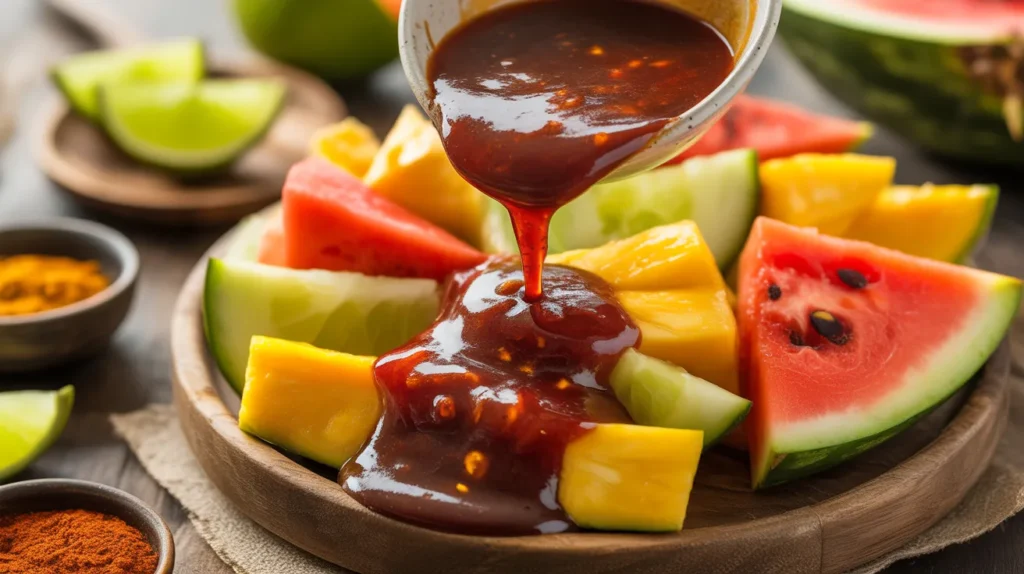
Chamoy is a staple in Mexican snacking culture. Some popular applications include:
- Fruits: Mango, pineapple, watermelon, and cucumber slices drizzled with chamoy and chili powder.
- Candies: Tamarind-flavored candies, gummies, lollipops, and lollies coated in chamoy.
- Chips: Potato chips, tortilla chips, or plantain chips dipped in or dusted with chamoy.
- Beverages: “Chamoyada” shaved ice drinks, smoothies, and cocktails.
- Desserts: Ice cream, sorbets, and even chocolate truffles can incorporate chamoy.
This versatility is part of what makes chamoy beloved by people of all ages.
Sensory Experience of Chamoy
Eating chamoy is more than just tasting; it’s a full sensory experience:
- Smell: Fruity with a hint of chili aroma, sometimes vinegary.
- Sight: Vibrant, glossy red color draws the eye.
- Taste: Balanced layers of sweet, sour, salty, and spicy flavors.
- Touch: Smooth, sticky texture that clings to the tongue and lips.
The combination of these sensory inputs often surprises newcomers, as it’s rare to find a flavor that is so dynamic and multi-layered.
Health and Nutritional Aspects
Chamoy is generally safe to eat in moderation. However, because it often contains sugar and salt, consuming large quantities might not be ideal for people with hypertension, diabetes, or other dietary restrictions. Here are some tips:
- Portion Control: Use small amounts as a topping or dip.
- Fruit Pairings: Pair with fresh fruit to increase vitamin and fiber intake.
- DIY Options: Making chamoy at home allows you to control sugar and salt levels.
Some chamoy products also contain antioxidants from the fruits used, such as apricots or tamarind.
Where Chamoy Can Be Found or Live
Chamoy can be found in various settings and is often incorporated into cultural and commercial products:
- Supermarkets and Grocery Stores: Especially in areas with Mexican or Latin American communities.
- Street Markets: Vendors often sell fresh fruit with chamoy drizzled on top.
- Specialty Stores: Latin American food shops carry artisanal chamoy and candy-coated products.
- Restaurants and Snack Stalls: Especially taquerías and ice cream shops that offer chamoyadas or chamoy-dipped treats.
- Home Kitchens: Many families make chamoy from scratch using traditional recipes passed down through generations.
Wherever it’s found, chamoy thrives in environments that celebrate fresh fruit, bold flavors, and creative culinary expression.
Tips for Enjoying Chamoy
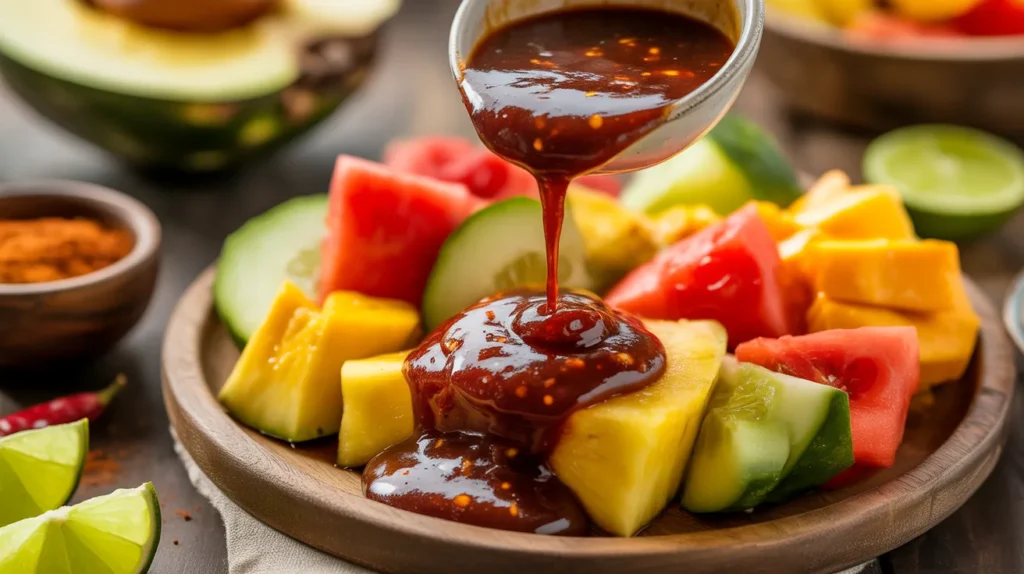
- Pair With Fruit: Mango, watermelon, cucumber, pineapple, and jicama are excellent choices.
- Adjust Spice: If homemade, tweak the chili amount to match your tolerance.
- Use as a Condiment: Chamoy can replace ketchup or hot sauce in some snacks for a tangy twist.
- Experiment: Try chamoy in drinks, cocktails, or even desserts like cheesecake or ice cream.
- Storage: Keep chamoy refrigerated once opened to maintain freshness and prevent fermentation.
How Chamoy Compares to Other Flavors
Chamoy has a distinctive profile that doesn’t directly match any single flavor in global cuisine:
- Not Just Sweet: Unlike honey or syrup, it has sour and salty notes.
- Not Just Spicy: The heat is balanced with sweetness and tang.
- Unique Experience: Few condiments combine sweet, sour, salty, and spicy in one bite.
Some people compare it to tamarind candy or a sweet chili sauce, but the flavor of chamoy is more complex and layered.
Common Questions About Chamoy
1. Is Chamoy Sweet or Spicy?
Chamoy is both. It balances sweetness from fruit, sourness from lime or vinegar, saltiness, and mild to moderate chili heat. The exact balance varies by recipe.
2. Can I Make Chamoy at Home?
Absolutely! Homemade chamoy allows you to control sweetness, spice level, and fruit choice. Common ingredients include mango, plum, apricot, chili, lime, salt, and sugar.
3. What Snacks Pair Best With Chamoy?
- Fresh fruit slices like mango, watermelon, and pineapple
- Potato or tortilla chips
- Candies, tamarind gummies, and lollipops
- Ice cream or frozen desserts
4. Is Chamoy Healthy?
In moderation, yes. It provides flavor without excessive calories if used as a condiment rather than a main ingredient. Fresh fruit pairings increase nutritional value.
5. How Should I Store Chamoy?
Refrigerate after opening and use within a few months. Homemade chamoy may last 2–4 weeks in a sealed container.
Conclusion
Chamoy is more than just a condiment—it’s a sensory adventure. With its layered sweet, sour, salty, and spicy notes, it transforms ordinary fruits, snacks, and drinks into extraordinary culinary experiences. Whether you’re exploring Mexican cuisine for the first time or are a seasoned fan of bold flavors, chamoy offers a unique taste journey that is both playful and complex.
By understanding its flavor profile, ingredients, and cultural significance, you can appreciate chamoy beyond just its taste—seeing it as a celebration of creativity, tradition, and the joy of snacking.
FAQ
Q1: Can chamoy be used in drinks?
Yes! Chamoy can enhance cocktails, smoothies, and frozen drinks like chamoyadas. Its sweet-tangy-spicy flavor adds a unique twist to beverages.
Q2: Is chamoy vegan?
Most chamoy is vegan, as it is primarily made from fruit, chili, sugar, and salt. Always check the label to ensure no animal-based additives are included.
Q3: Can I substitute chamoy in recipes?
You can, but it’s hard to replicate its unique flavor. Tamarind paste with chili, lime, and sugar can mimic some aspects, but chamoy’s layered taste is distinctive.