


A Complete, Easy-to-Understand Guide to One of the World’s Most Important Professions
Civil engineering is one of the oldest and most impactful professions in human history. From the roads you drive on to the buildings you live and work in, civil engineers play a critical role in shaping the world around us. Yet many people still ask a simple question:
What does a civil engineer actually do?
This guide breaks it all down in a clear, friendly, and practical way. Whether you’re a student exploring careers, a parent guiding your child, or simply curious, you’ll walk away with a complete understanding of what civil engineers do, where they work, and why their job matters so much.
What Is a Civil Engineer?
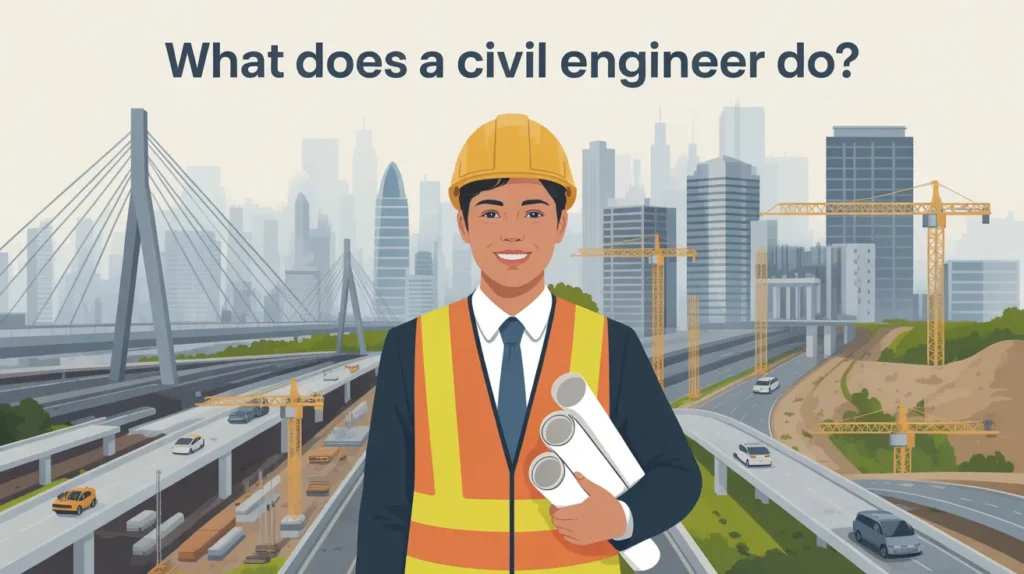
A civil engineer is a professional who plans, designs, builds, and maintains infrastructure that supports everyday life. This includes:
- Roads and highways
- Bridges and tunnels
- Buildings and housing projects
- Water supply and sewage systems
- Airports, railways, and ports
- Dams, canals, and flood defenses
Civil engineers combine science, mathematics, creativity, and problem-solving to create structures that are safe, durable, cost-effective, and environmentally responsible.
In simple terms:
If people use it every day, a civil engineer probably helped build it.
Why Civil Engineering Is So Important
Civil engineering directly affects public safety, economic growth, and quality of life. Without civil engineers:
- Cities would lack safe water and sanitation
- Roads would be unsafe or nonexistent
- Buildings would collapse under stress
- Flooding and environmental damage would increase
Key Benefits of Civil Engineering
- Improves public health and safety
- Supports transportation and trade
- Protects the environment
- Enables urban development
- Creates long-lasting infrastructure
Civil engineers don’t just build things—they solve real-world problems.
Core Responsibilities of a Civil Engineer
While duties vary by specialization, most civil engineers perform a combination of the following tasks.
Planning and Project Design
Before construction begins, civil engineers:
- Study land, soil, and environmental conditions
- Analyze feasibility and safety
- Create detailed plans and drawings
- Use software like AutoCAD, Civil 3D, or BIM tools
Visual cues of this stage:
- Blueprints and technical drawings
- Digital 3D models
- Site surveys and maps
Site Investigation and Analysis
Civil engineers must understand the ground they are building on.
This includes:
- Soil testing
- Water table analysis
- Earthquake risk assessment
- Environmental impact studies
Tip: Poor site analysis can lead to cracks, flooding, or structural failure later.
Construction Supervision
Civil engineers often oversee construction sites to ensure:
- Work follows design plans
- Materials meet safety standards
- Timelines and budgets are followed
- Workers follow safety rules
They act as the bridge between design and reality.
Maintenance and Inspection
Even after a project is completed, civil engineers may:
- Inspect bridges and buildings
- Monitor wear and tear
- Plan repairs or upgrades
- Improve safety features
This is crucial for aging infrastructure.
Types of Civil Engineers (Specializations)
Civil engineering is a broad field with many sub-disciplines.
Structural Engineers
Structural engineers focus on buildings and large structures.
They ensure:
- Structures can handle loads (weight, wind, earthquakes)
- Materials are strong and durable
- Designs meet safety codes
Common projects:
- Skyscrapers
- Bridges
- Stadiums
Transportation Engineers
These engineers design systems that move people and goods.
They work on:
- Roads and highways
- Railways
- Airports
- Traffic systems
Visual cues:
- Road layouts
- Traffic flow charts
- Signage and lane markings
Environmental Engineers
Environmental civil engineers protect natural resources.
They focus on:
- Water treatment systems
- Waste management
- Pollution control
- Sustainable development
Symptoms of poor environmental engineering:
- Contaminated water
- Flooding
- Air or soil pollution
Geotechnical Engineers
These engineers study soil and rock behavior.
They handle:
- Foundations
- Slopes and retaining walls
- Landslide prevention
Without geotechnical engineers, buildings may shift or collapse.
Water Resources Engineers
Water resource engineers manage water systems.
They design:
- Dams
- Canals
- Drainage systems
- Flood control structures
Their work is critical in drought- or flood-prone regions.
A Typical Day in the Life of a Civil Engineer
No two days are exactly the same, but a civil engineer’s day may include:
- Reviewing drawings and calculations
- Visiting construction sites
- Meeting with architects or contractors
- Solving design problems
- Writing reports and documentation
Some engineers work mostly in offices, while others spend significant time outdoors.
Skills Every Civil Engineer Needs
Technical Skills
- Mathematics and physics
- Engineering software
- Structural analysis
- Material science
Soft Skills
- Communication
- Teamwork
- Problem-solving
- Time management
Practical Tip
Strong communication skills are just as important as technical knowledge, especially when working with non-engineers.
Tools and Technology Used by Civil Engineers
Modern civil engineering relies heavily on technology.
Common Tools Include:
- AutoCAD and Civil 3D
- BIM (Building Information Modeling)
- GIS mapping tools
- Surveying instruments
- Project management software
These tools improve accuracy, efficiency, and safety.
Education and Training Required
To become a civil engineer, most people follow this path:
- Bachelor’s degree in Civil Engineering
- Internship or practical training
- Professional licensing (varies by country)
- Continuing education
Tip for Students
Choose accredited programs and gain site experience early—it makes a huge difference.
Where Civil Engineers Can Be Found or Work
(Adapted to match the requested section title)
Civil engineers don’t “live” in one place—but they work across a wide range of environments.
Common Work Locations
- Construction sites
- Engineering offices
- Government departments
- Consulting firms
- Universities and research centers
Environments They Operate In
- Urban cities
- Rural areas
- Coastal regions
- Mountainous terrain
- Industrial zones
Civil engineers often adapt to challenging conditions, including extreme weather, tight deadlines, and complex terrain.
Signs You Might Be Interested in Civil Engineering
You may be suited to civil engineering if you:
- Enjoy problem-solving
- Like working with numbers and designs
- Care about public safety
- Enjoy seeing real-world results
- Are curious about how things are built
These “career symptoms” often appear early in students who thrive in engineering.
Practical Advice for Aspiring Civil Engineers
- Focus on math and physics early
- Learn basic design software
- Visit construction sites when possible
- Ask working engineers about their experience
- Build patience—projects take time
Common Challenges Civil Engineers Face
- Tight deadlines
- Budget constraints
- Safety responsibilities
- Environmental concerns
- Regulatory compliance
Despite these challenges, many engineers find the work deeply rewarding.
Why Civil Engineering Is a Stable Career
Civil engineering remains in demand because:
- Infrastructure always needs maintenance
- Cities continue to grow
- Climate adaptation projects are increasing
- Transportation systems evolve constantly
It’s a profession with long-term relevance.
Frequently Asked Questions (FAQ)
1. Is civil engineering a good career choice?
Yes. Civil engineering offers job stability, competitive salaries, and the satisfaction of building real-world projects that benefit society.
2. Do civil engineers work mostly in offices or outdoors?
It depends on the role. Many engineers split their time between office work and site visits.
3. Is civil engineering difficult to study?
It can be challenging due to math and technical concepts, but with consistent effort and practical experience, many students succeed.
4. What’s the difference between a civil engineer and an architect?
Architects focus on aesthetics and space design, while civil engineers focus on structural safety, materials, and construction feasibility.
Final Thoughts
Civil engineers are the silent guardians of modern life. Their work supports transportation, clean water, safe buildings, and sustainable development. While the profession requires dedication and responsibility, it offers immense personal and societal rewards.
If you’ve ever wondered who makes cities function—now you know.